What foods cause bloating?
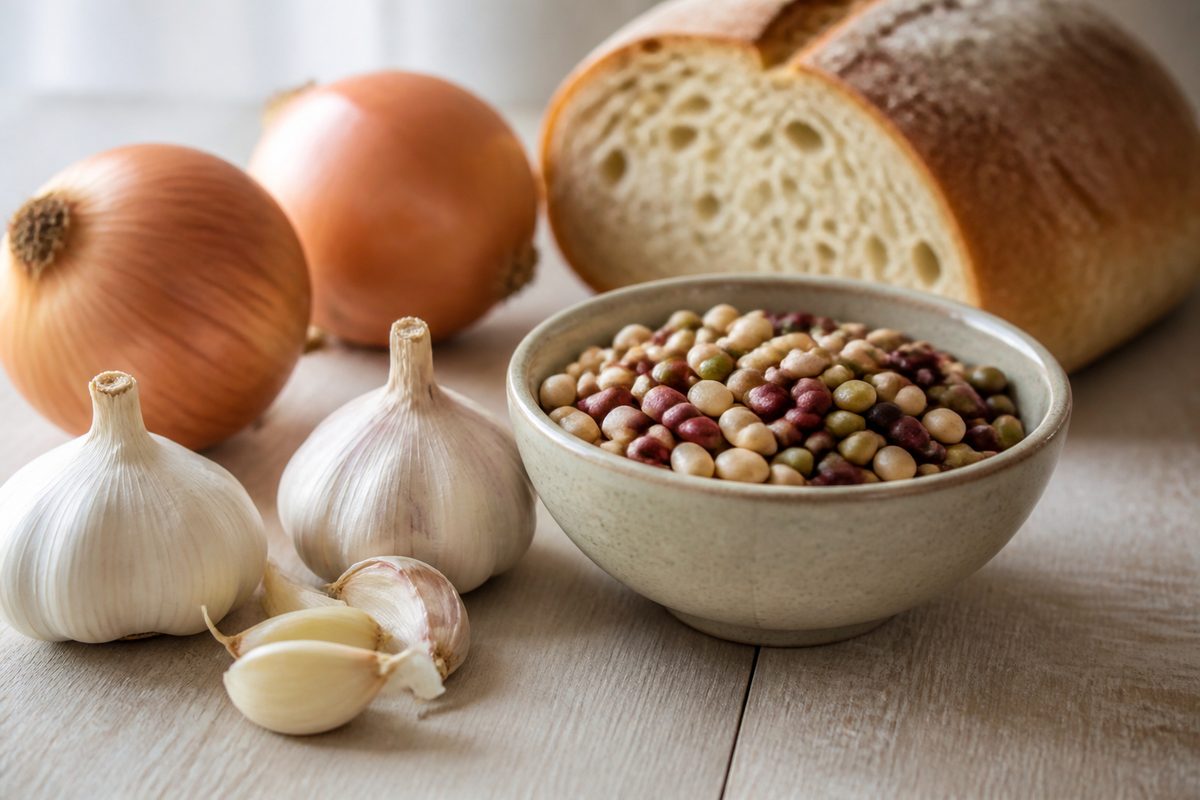
Some foods are much more likely to cause bloating than others. Common culprits include garlic, onions, beans, wheat-based foods, some vegetables, dairy products, fizzy drinks, and large or high-fat meals.
But bloating can happen for different reasons. Some foods contain carbohydrates that ferment in the gut and produce gas. Fizzy drinks can introduce extra gas directly into the stomach. Salty foods can cause water retention, while large or fatty meals can simply leave you feeling uncomfortably full for longer.
Here are some of the foods most commonly associated with bloating, why they may cause it, and what Eat Smart Kiwi users have found in their own food and symptom diaries.
Garlic and onions
Garlic and onions are common triggers for people with bloating and IBS.
Both are high in fructans, a type of fermentable carbohydrate (FODMAP). Fructans are not completely absorbed in the small intestine, so they can reach the colon where gut bacteria ferment them. This can produce gas and increase water in the bowel.[1]
Garlic is also one of the stronger foods associated with increased bloating in Eat Smart Kiwi diaries.
Read more: Does garlic cause bloating?
Beans, peas and other pulses
Beans and pulses are well known for causing gas and bloating in some people.
Foods such as black beans, peas, hummus, and falafel contain galacto-oligosaccharides (GOS). Humans do not digest these carbohydrates completely, allowing gut bacteria to ferment them and produce gas.
Portion size matters. A small serving may cause no problems while a large bowl of beans may produce noticeable symptoms.
Broccoli and cauliflower
Broccoli and cauliflower can cause bloating because of their fibre and fermentable carbohydrate content.
Cauliflower in particular contains the polyol mannitol, which is a FODMAP. Larger servings are therefore more likely to cause symptoms in sensitive people.
Pasta and other wheat-based foods
Pasta can contribute to bloating for several reasons.
Wheat contains fructans, while pasta is often eaten in relatively large portions. Pasta dishes may also contain other common bloating triggers such as garlic, onion, cheese or rich sauces.
This means feeling bloated after spaghetti doesn't necessarily tell you which ingredient was responsible.
Read more: Does pasta cause bloating?
Dairy products
For people who have difficulty digesting lactose, dairy products can cause gas, bloating and other digestive symptoms.
The amount of lactose varies considerably between dairy foods, so you may tolerate some products better than others.
Eat Smart Kiwi has individual analyses for dairy, cream, sour cream, halloumi, and lactose-free milk.
Avocado
Avocado contains fibre and polyols, another group of poorly absorbed carbohydrates that can cause digestive symptoms.
Again, serving size can make a substantial difference. A few slices of avocado may be well tolerated even if a much larger portion causes bloating.
Read more: Does avocado cause bloating?
Fizzy drinks
Carbonated drinks can make you feel bloated simply because they introduce extra gas into the digestive system.
Coke, other soft drinks and sparkling water contain dissolved carbon dioxide. Drinking them increases the amount of gas and liquid in the stomach, which can contribute to a stretched or bloated feeling.[2]
Beer and alcohol
Beer combines several potential causes of bloating. It is carbonated, adds liquid volume, and some beers contain fermentable carbohydrates.
Red wine isn't carbonated, but alcohol and the overall volume of food and drink consumed with it may still contribute to digestive symptoms.
Beer is also among the stronger bloating associations seen in Eat Smart Kiwi's community diary data.
Salty foods
Salt can make you feel bloated without producing intestinal gas.
Higher sodium intake encourages the body to retain more fluid. In the DASH-Sodium trial, higher sodium intake was associated with an increased risk of bloating.[3]
Salt also shows a strong association with bloating in Eat Smart Kiwi diaries.
This may help explain why takeaway food can leave you feeling particularly puffy or bloated the following day.
Fatty and heavy meals
Large, energy-dense meals tend to empty from the stomach more slowly, which can prolong feelings of fullness and abdominal distension.[4]
Foods such as French fries, crisps, and tortilla chips combine fat, salt and a high energy density.
Pizza
Pizza is a good example of why identifying a single trigger can be difficult.
A typical pizza may contain wheat, cheese, garlic, onion, plenty of salt and a relatively large amount of fat. Any one of those factors — or the combination — could contribute to bloating.
Read more: Does pizza cause bloating?
What about rice, potatoes and carrots?
Not every food associated with bloating is a classic high-FODMAP food.
Eat Smart Kiwi diaries also show associations between bloating and foods including rice, potato, and carrot.
That doesn't necessarily mean these foods directly cause bloating. Rice and carrots, for example, are generally considered low-FODMAP foods.
There are several possible explanations. Portion size matters, foods are rarely eaten alone, and people who frequently eat a particular food will naturally have many opportunities to record symptoms after eating it. Observational diary associations therefore provide useful clues rather than proof that a food is a trigger.
Other foods associated with bloating
We've also analysed bloating after a range of other foods recorded by Eat Smart Kiwi users, including:
- Corn
- Mushrooms
- Celery
- Flour
- Chocolate
- Beef
- Mayonnaise
- Soy sauce
- Coleslaw
- Ketchup
- Gravy
- Custard
- Cheesecake
- Chocolate cake
- Balsamic vinegar
- Lemon
Each page compares the pattern seen in food and symptom diaries with what published research suggests about the food.
Foods that may help with bloating
Some foods in Eat Smart Kiwi diaries are associated with less bloating rather than more.
Examples include flax seeds, almond milk, lactose-free milk, and collagen peptides.
These associations don't mean the foods are treatments for bloating. In some cases they may simply be alternatives to foods that are more likely to cause symptoms.
How to work out which foods cause your bloating
A list of common triggers can give you somewhere to start, but bloating varies enormously between people.
If you're trying to identify your own triggers:
- Change one thing at a time rather than cutting out many foods together.
- Pay attention to portion size as well as the food itself.
- Remember that several fermentable foods in the same meal or day can add up.
- Consider whether bloating happens immediately after eating or several hours later.
- Keep track of foods and symptoms so you can look for patterns over time.
Find your own bloating triggers
Eat Smart Kiwi is a food and symptom tracker designed to help identify relationships between what you eat and how you feel.
Log your meals and bloating, and Eat Smart Kiwi looks for associations between foods and your subsequent symptoms — including patterns that occur hours or days later. You can also compare your results with patterns found across other users.
You can keep a diary for free, with more detailed analysis available on the paid plan and free trial.
If digestive symptoms are your main concern, see our food diary for IBS, foods that cause gas, or our guide to keeping a food and symptom diary.
Get started in the browser, or install the app


References
- Halmos EP, et al. A diet low in FODMAPs reduces symptoms of irritable bowel syndrome. Gastroenterology. 2014.
- Camps G, de Graaf K, Smeets PAM. Men and women differ in gastric fluid retention and neural activation after consumption of carbonated beverages. J Nutr. 2018.
- Peng AW, et al. Effects of the DASH diet and sodium intake on bloating: results from the DASH-sodium trial. Am J Gastroenterol. 2019.
- Hunt JN, Stubbs DF. The volume and energy content of meals as determinants of gastric emptying. J Physiol. 1975.
This article is for general information only and is not medical advice. If bloating is severe, persistent, or accompanied by unexplained weight loss, blood in your stool, or symptoms that wake you at night, talk to a healthcare professional.