Does hummus cause bloating?
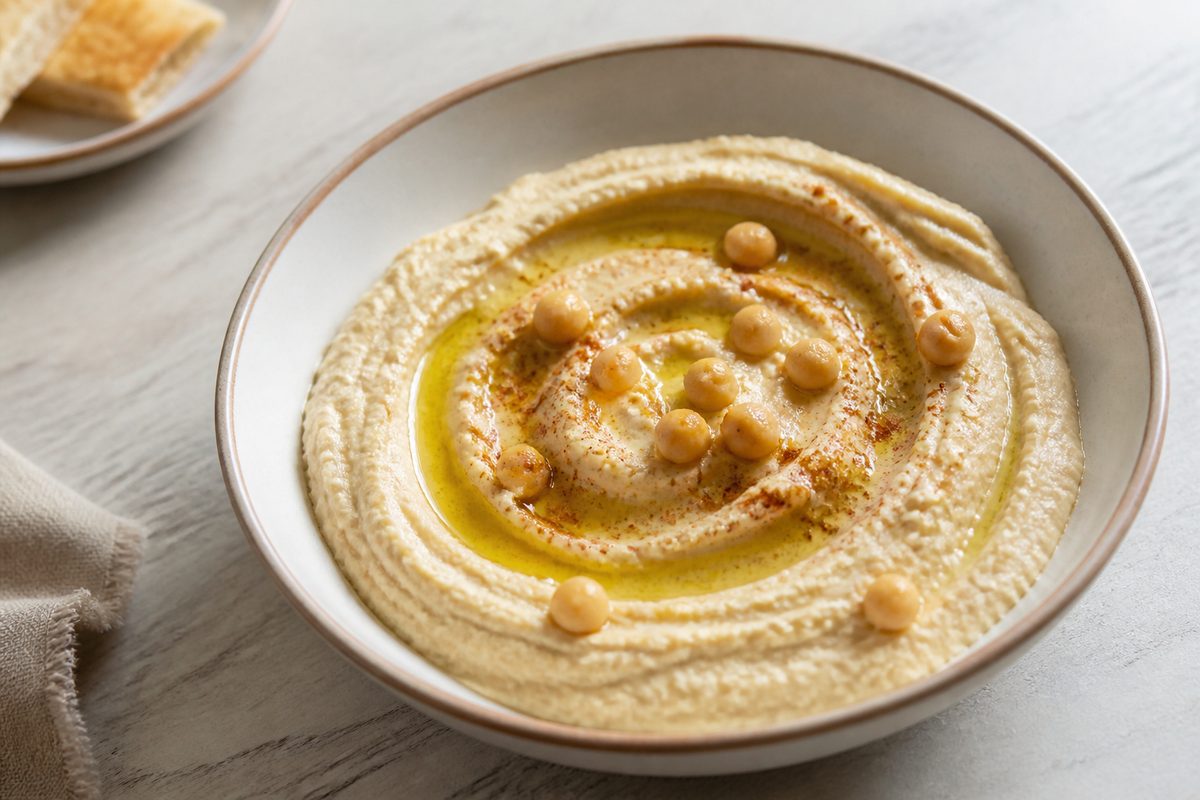
Yes — hummus can cause or worsen bloating. It is a nutritious chickpea dip, but chickpeas are legumes: they carry fermentable carbs that gut bacteria turn into gas. Garlic, which is in many recipes, adds more FODMAPs on top. Among foods linked to bloating in Eat Smart Kiwi community data, hummus ranks #58.[1][2]
That is a mid-table rank — not a top trigger — but the chickpea mechanism is real, and about 800 users still log the pair.
Why hummus causes bloating
Chickpeas are rich in galacto-oligosaccharides (GOS) such as raffinose and stachyose. Humans do not make the enzymes to break these sugars down in the small intestine, so they reach the colon, where bacteria ferment them and produce hydrogen, carbon dioxide, and sometimes methane — felt as wind, pressure, and a tight, stretched belly. Unabsorbed oligosaccharides can also pull water into the bowel, which adds stretch.[1][2]
Fibre in the chickpeas adds to that load. A thin smear on a cracker is a different serve from a large tub with pita.
Garlic (and sometimes onion) in hummus is a second trigger. Garlic is high in fructans, another FODMAP. A garlic-heavy dip can bother you even when a small amount of plain mashed chickpea might not.[2]
People with IBS often feel the same gas more strongly than others.[2]
Who is most affected
Tolerance varies:
- IBS and FODMAP sensitivity — the same fermentation can feel much more uncomfortable.[2]
- People eating a large scoop — more chickpea (and garlic) means more fermentable load.[1]
- Anyone stacking — hummus plus pita wheat, onion on the plate, or other pulses the same meal can tip you over your threshold.[2]
- People increasing pulses quickly — a sudden jump in legumes can mean more wind at first; in bean feeding studies, extra flatulence often eased after a week or two of keeping pulses in the diet.[3]
What you can try
- Shrink the portion — a tablespoon is a different GOS load from several scoops.[1]
- Compare garlic-free — plain chickpea dip versus a garlicky supermarket tub is a useful diary contrast.[2]
- Rinse tinned chickpeas if you make it at home — some water-soluble oligosaccharides leach into the canning liquid; discard that liquid.[1]
- Keep the rest of the plate simple — rice or potato with hummus is a cleaner test than pita, onion, and extra beans.[2]
- Build up gradually — if pulses are new, increase over days rather than a whole tub at once.[3]
- Enzyme products (optional) — over-the-counter alpha-galactosidase can help some people with legume-related wind; check with a pharmacist if unsure.
Eat Smart Kiwi community data
Among foods linked to bloating in Eat Smart Kiwi community data, hummus ranks #58. Hummus and bloating also ranks #98 among all food–symptom pairs tracked in the app.
The link is most often seen within about 8 hours of eating hummus, based on aggregated diary data from about 800 users. These are real-world logging patterns among people tracking digestive health; they are not a clinical trial and do not prove hummus caused bloating in every case — but they match what many people report after chickpeas, especially in a garlicky dip.
Why tracking helps you
Shop-bought versus homemade, garlic versus plain, and a smear versus a bowl all change the picture. Logging how you ate hummus next to bloating scores shows whether your pattern is chickpeas, garlic, portion — or the pita it came with.
Summary
Hummus often contributes to bloating because chickpea GOS (and often garlic fructans) ferment in the gut — and it shows up in Eat Smart Kiwi tracking. Smaller portions, a less garlicky dip, and your own diary are practical ways to keep it with less discomfort.
Track food and symptoms with Eat Smart Kiwi.
This article provides general information and is not intended as medical advice. Consult a healthcare professional or registered dietitian before making significant diet changes, especially if you have a diagnosed gastrointestinal condition.