Does banana help with bloating?
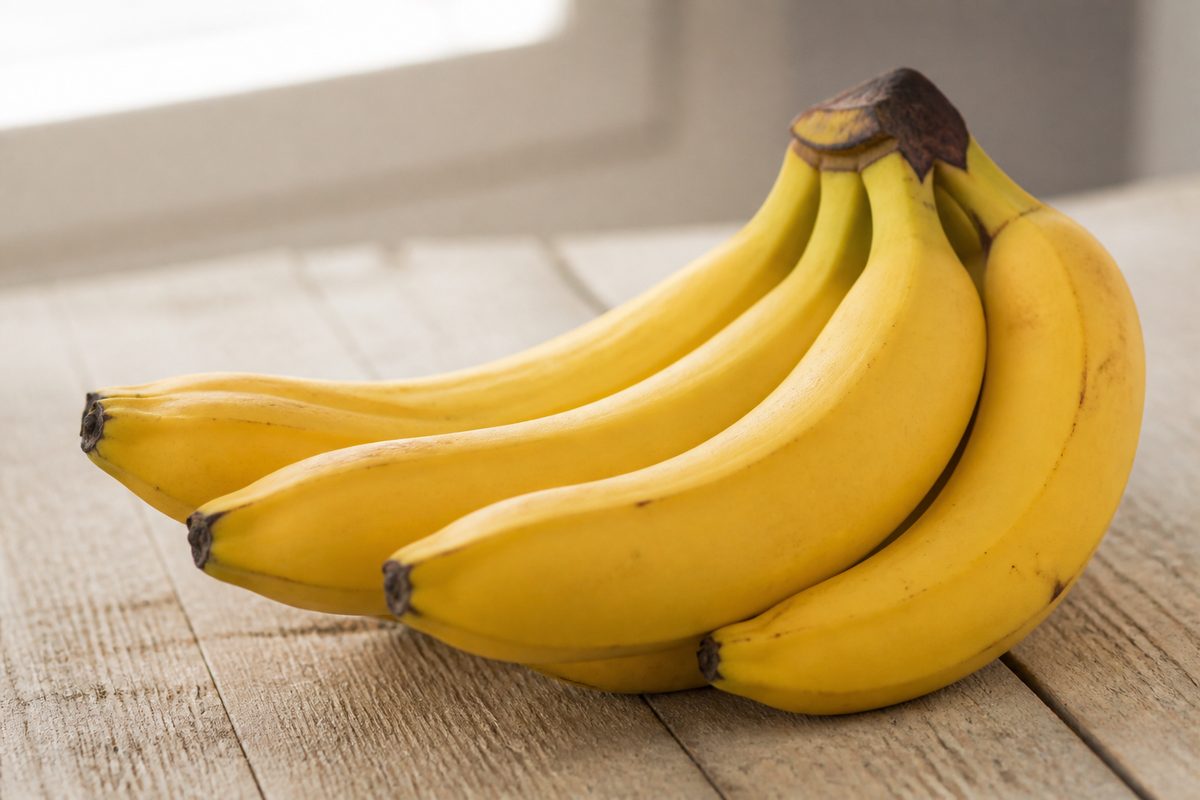
Yes — banana can sit with less bloating for some people. Among foods linked to bloating in Eat Smart Kiwi community data, banana ranks #12 — and the direction is that banana helps.
That is a solid community rank from a large diary group (about 2,000 users), not a fruit that treats IBS or a swollen belly from constipation, fluid, or a medical cause. There is no clinical trial of a banana for bloating in the three hours after a snack. Apple and pear are the opposite fruit story in this community: both worsen gas.
Why banana might help
Eat Smart Kiwi users who log banana often report quieter bloating scores in the following three hours. That is a snack window, not a weeks-long diet protocol.
Bloating after fruit is often fermentation. Poorly absorbed short-chain carbs (FODMAPs) reach the colon, draw in water, and feed bacteria that make gas. Lowering that load has been shown to reduce bloating in people with IBS.[2]
Analyses of common fruit flag apple, pear, mango, clingstone peach, and watermelon for fructose in excess of glucose — the pattern most linked to poor fructose absorption. Banana is not in that group.[1] A typical banana also is not a high-sorbitol fruit the way apple and pear are.[1] So swapping a windy fruit for a banana is a plausible everyday reason this pair shows up. It is not proof that banana “soothes” the gut or that the sugars never ferment.
A banana still has fibre and, when greener, more resistant starch. That starch does reach the colon and can ferment. It is not a gentle prebiotic that skips wind. A very ripe, speckled banana is a sweeter, starch-lighter fruit — a useful diary split, not a FODMAP guarantee from a single HPLC sample.
Do not treat a generic bloating-management review as a banana trial. Do not treat a fibre-and-prebiotics overview as resistant-starch proof. Do not treat bananas, rice, and potato as a named “anti-bloat plate” in the papers we have. Foley’s bloating review actually notes that extra fibre can make bloating worse.
A smoothie with milk, yoghurt, or apple juice is not a banana. Banana bread, dried banana, and chips are different logs.
Who is most likely to notice a benefit
- People already snacking on banana — that is what the diaries measure, not a low-FODMAP menu.[1]
- Anyone swapping it for apple or pear — those fruits carry excess fructose and sorbitol; banana is a contrast, not a prescription.[1]
- People whose bloating follows a heavier, mixed fruit bowl — three hours is short; the rest of the plate still matters.
- Anyone hoping a banana flattens constipation-bloating — stool sitting in the colon can puff the belly; banana is not a constipation trial. Flax seeds and oatmeal are separate pairs.
Persistent, painful, or unexplained bloating still needs a doctor.
What you can try
- Eat a normal banana on its own — not banana bread and not a large smoothie.[1]
- Compare firm versus very ripe — same time of day, so you can see whether your pattern is the fruit or the ripeness.
- Do not credit the banana if you swapped it for apple or pear — those two often worsen gas in this community.
- Keep the rest of the snack simple — yoghurt, oats, and dried fruit change the fermentable load.
- Compare in your tracker — days with banana versus without, and one fruit versus a mixed bowl, shows whether your pattern matches the community trend.
Eat Smart Kiwi community data
Among foods linked to bloating in Eat Smart Kiwi community data, banana ranks #12 — and the direction is that banana helps. Banana and bloating also ranks #104 among all food–symptom pairs tracked in the app — a lower mid-table overall rank, not a top pair across the whole food–symptom list.
The pattern is most often seen within about 3 hours of eating banana, based on aggregated diary data from about 2,000 users. These are real-world logging patterns among people tracking digestive health; they are not a clinical trial and do not prove banana reduced bloating in every case — but they are the strongest evidence we have for this specific pair, and they sit with banana’s HPLC profile: not an excess-fructose fruit like apple or pear.
Why tracking helps you
A firm snack banana, a brown speckled one, a smoothie, and banana bread are different experiments. Logging how you ate it next to bloating scores shows whether your pattern matches the community trend — or whether you simply skipped a windier fruit.
If you want to see whether banana or the rest of the snack is easing your bloating, try logging in the Eat Smart Kiwi food and symptom tracker.
Summary
Banana often sits with less bloating in Eat Smart Kiwi tracking, and about 2,000 users log the pair. HPLC tables do not put banana with apple and pear for excess fructose; that is a plausible reason a swap feels quieter, not a three-hour banana trial. A single fruit, a ripeness contrast, and your own diary are practical next steps.
This article is for general information only and is not medical advice. If bloating is severe, sudden, or persistent, see a doctor.