Does oatmeal help with constipation?
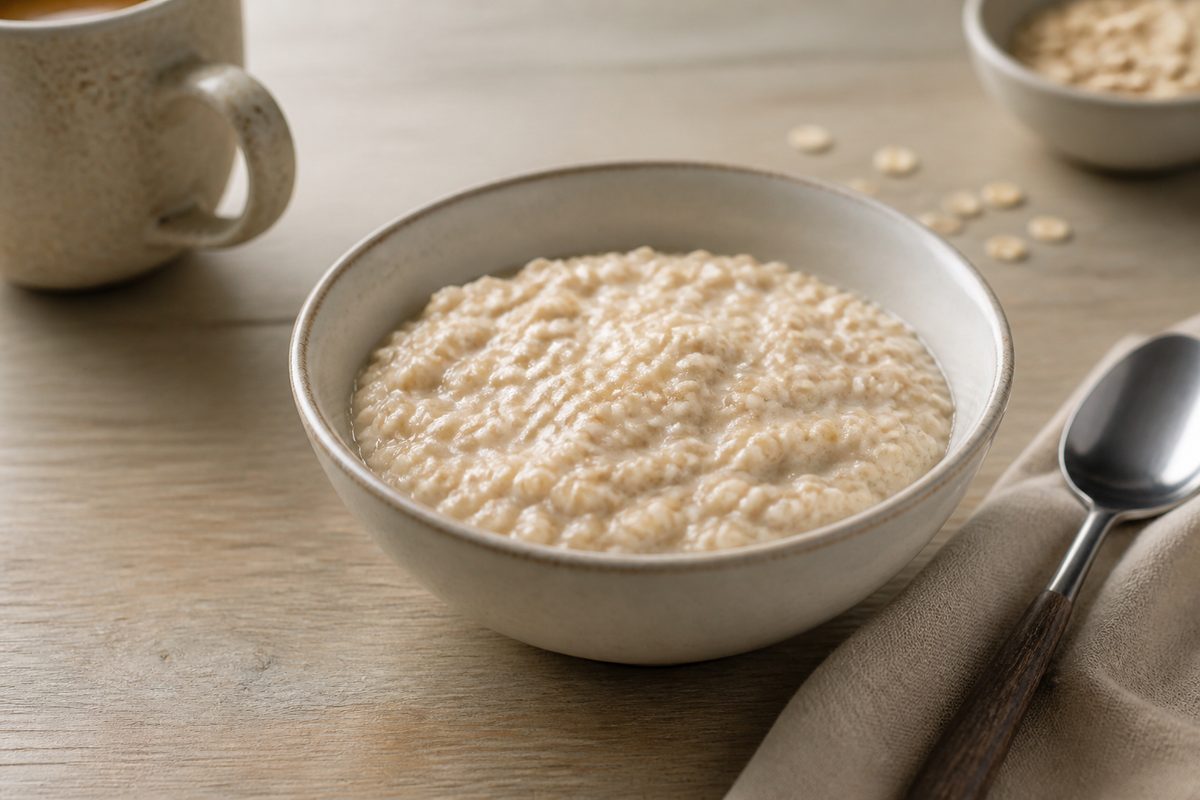
Yes — oatmeal can sit with less constipation for some people. Among foods linked to constipation in Eat Smart Kiwi community data, oatmeal ranks #4 — and the direction is that oatmeal helps.
That is a strong community rank from about 300 diaries, not a bowl that treats bowel obstruction or replaces a prescribed laxative. Coffee ranks higher for this symptom. Oats, porridge, and oatmeal are logged separately. A plain cooked bowl is not muesli, overnight oats, or a muffin that happens to contain oats.
Why oatmeal might help
Eat Smart Kiwi users who log oatmeal often report quieter constipation scores in the following eight hours. That is a breakfast-to-afternoon window. The useful oat trials ran for days to weeks and mostly used oat bran, not a single supermarket porridge.
Oats mix soluble fibre (including beta-glucan) with some insoluble fibre. In five men on controlled diets, adding oat bran raised daily stool weight. Wheat bran did too, but by a different route: more leftover plant fibre in the stool. Oat bran was almost fully fermented; the extra stool mass was largely bacteria and fat, not intact oat flakes sitting in the colon.[1] So the “gel softens stool, husk scrapes the bowel” split in popular writing is too neat. Fermentation and extra bacterial bulk are a large part of why oat fibre can make stools heavier.
A systematic review of oat and oat-bran interventions in people without bowel disease found the same pattern: stool weight often rose, and constipation sometimes eased. Stool frequency and transit time often did not change. There was no clear proof that oats beat other cereals for bowel function.[2]
So the honest picture is: diaries often sit quieter after oatmeal; oat bran can increase stool weight over days; a heavier stool is not the same as an eight-hour “natural laxative.” Possible everyday reasons the pair shows up include a warm, watery breakfast, extra fluid with the bowl, the gastrocolic push after any breakfast, or a real fibre effect that trials measured over longer feeds.
Do not treat a 1983 oat-bran bile study as constipation research. Do not treat a children’s fibre review that found limited oat data as proof that daily oatmeal fixed straining in kids. Do not treat mouse loperamide papers as a breakfast trial. Do not treat “drink lots of water with fibre” as a flush protocol.
The same food worsens diarrhoea for some Eat Smart Kiwi users. A looser stool is not always a win. Porridge is a separate gas pair.
Who is most likely to notice a benefit
- People already eating oatmeal as a usual breakfast — that is what the diaries measure, not weeks of oat-bran packets.[2]
- Anyone whose diet has been low in fibre — a modest bowl is a gentler start than a sudden bran dump; wind can rise at first.
- People comparing it with a low-fibre breakfast — the contrast may be the meal you did not eat.
- Anyone hoping one bowl treats severe, long-standing constipation — trials are mixed on frequency; medical constipation still needs a doctor.[2]
Sudden severe pain, blood in the stool, unexplained weight loss, or no bowel motion for days still needs a doctor — not more oats.
What you can try
- Start with a modest cooked bowl — not a dry cup of raw oats and not a huge bran serve overnight.[1]
- Have a drink with it — a dry, fibre-heavy breakfast can feel heavier; that is the meal, not a water-flush protocol.
- Keep toppings simple while you test — dried fruit, lots of milk, or sugar-free syrups change the fermentable load.
- Give it more than one morning — stool-weight studies ran for days, not one 8-hour log.[1][2]
- Log oats and porridge separately — those names are different foods in the app.
- Compare in your tracker — days with oatmeal versus without, and whether the bowel actually moved, shows whether your pattern matches the community trend.
Eat Smart Kiwi community data
Among foods linked to constipation in Eat Smart Kiwi community data, oatmeal ranks #4 — and the direction is that oatmeal helps. Oatmeal and constipation also ranks #102 among all food–symptom pairs tracked in the app — a lower mid-table overall rank, not a top pair across the whole food–symptom list.
The pattern is most often seen within about 8 hours of eating oatmeal, based on aggregated diary data from about 300 users. These are real-world logging patterns among people tracking digestive health; they are not a clinical trial and do not prove oatmeal relieved constipation in every case — but they are the strongest evidence we have for this specific pair, and they sit in a much shorter window than oat-bran feeding studies.
Why tracking helps you
Rolled oats, instant sachets with sugar, overnight oats, and oat bran are different experiments. Logging the bowl and the toppings next to constipation scores shows whether your pattern matches the community trend — or whether coffee, water, or the rest of breakfast is doing the work.
If you want to see whether oatmeal or the rest of the morning is easing your constipation, try logging in the Eat Smart Kiwi food and symptom tracker.
Summary
Oatmeal often sits with less constipation in Eat Smart Kiwi tracking, and it ranks #4 among foods for that symptom. Oat bran can increase stool weight over days, largely via fermentation and bacterial bulk, not a unique eight-hour laxative. A modest cooked bowl, simple toppings, and your own diary are practical next steps.
This article is for general information only and is not medical advice. If constipation is severe, sudden, or persistent, or comes with blood, weight loss, or severe pain, see a doctor.