Does gravy cause bloating?
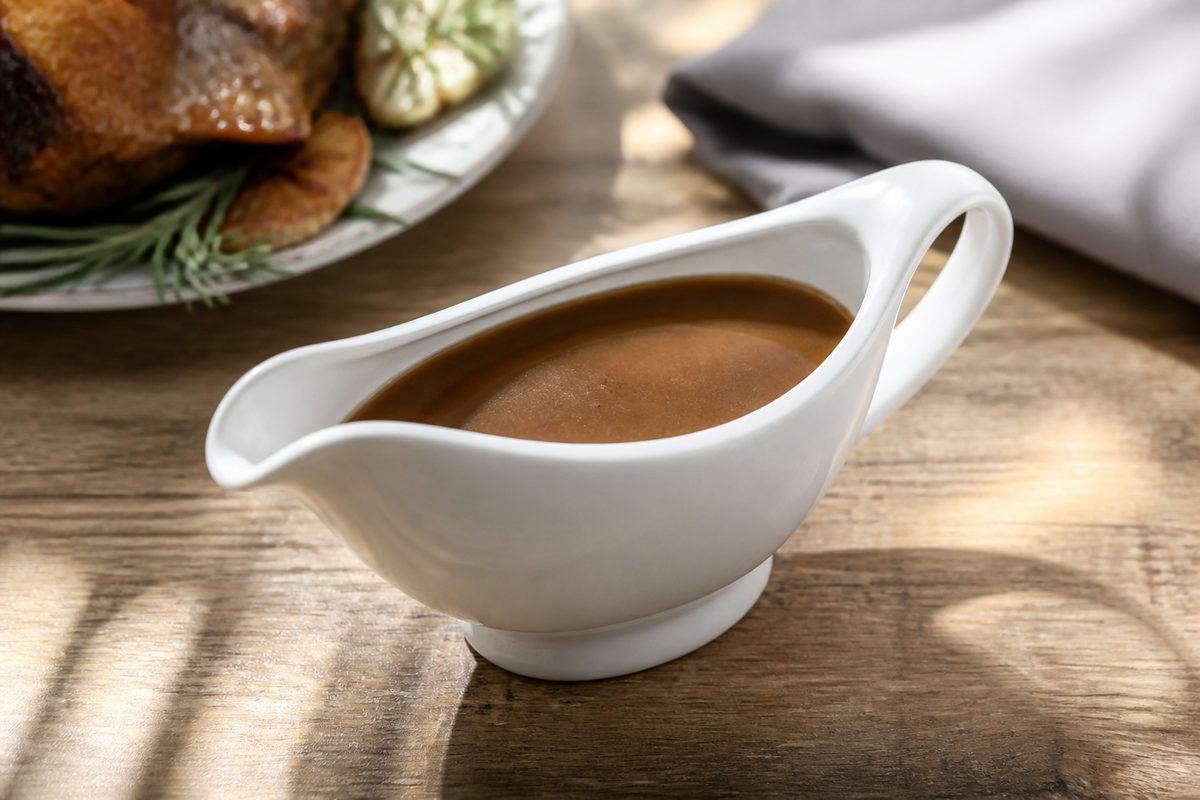
Yes — gravy can worsen bloating for some people. Among foods linked to bloating in Eat Smart Kiwi community data, gravy ranks #78.[1][2]
That is a lower mid-table rank — not a top trigger. A light drizzle of pan juices is a different experiment from a thick jug of granule gravy on a full roast plate. Gravy is a sauce, not a meal on its own, and recipes vary wildly.
Why gravy can cause bloating
Fat is the first pathway. Homemade gravy is often made from roasting juices and dripping. Higher-energy, fattier meals empty from the stomach more slowly than lighter ones, so the upper gut stays fuller for longer — a heavy, tight feeling many people log as bloating.[1] Skimming the fat off the juices is a different load from pouring the lot back in.
Wheat and flavour powders are the second. Traditional gravy is thickened with wheat flour. Instant granules often add onion and garlic powder as well. Wheat, onion, and garlic are high in fructans (FODMAPs). Those short-chain carbs are poorly absorbed, ferment in the colon, and can stretch the bowel. People with IBS often feel that stacked load more strongly; lowering FODMAP intake has been shown to reduce bloating.[2]
What the gravy sits on usually matters as much as the sauce. A roast with Yorkshire pudding, stuffing, onion, mash, and a large pour is easy to blame on gravy when the rest of the plate did more of the work.[1][2]
Cornflour (cornstarch) as a thickener skips wheat fructans. It does not remove fat, onion powder, or a huge meal.
In the app, gravy is logged as gravy. Homemade meat juices, supermarket granules, and a pub jug are different experiments if you note which one you had.
Who is most affected
Tolerance varies:
- People sensitive to fatty meals — a rich, unskimmed gravy can feel especially tight.[1]
- IBS and FODMAP sensitivity — wheat flour plus onion or garlic powder may matter more than the meat juices.[2]
- Anyone stacking — gravy plus pudding, stuffing, beer, and a large roast is a different load from a spoon on plain potato.[1][2]
- Granule drinkers — onion and garlic in the packet are a concentrated FODMAP hit compared with plain juices.[2]
You do not need a diagnosis to notice it. You also do not need to eat dry food if the onion powder or the fat dump is the actual trigger.
What you can try
- Use less — a drizzle is a different fat and FODMAP load from drowning the plate.[1]
- Skim the fat — let juices settle and lift off the dripping before you thicken.[1]
- Try cornflour instead of wheat flour — a useful diary contrast for the fructan pathway; onion and fat may still be there.[2]
- Check the packet — skip granules that list onion or garlic high in the ingredients, or make a simpler homemade version.[2]
- Watch the rest of the roast — Yorkshire pudding, stuffing, and a huge plate can mask whether gravy itself is doing the work.[2]
You do not have to give up gravy. Finding which recipe and how much you tolerate is the practical goal.
Eat Smart Kiwi community data
Among foods linked to bloating in Eat Smart Kiwi community data, gravy ranks #78. Gravy and bloating also ranks #134 among all food–symptom pairs tracked in the app.
The link is most often seen within about 8 hours of eating gravy, based on aggregated diary data from about 400 users. These are real-world logging patterns among people tracking digestive health; they are not a clinical trial and do not prove gravy caused bloating in every case — but they match what many people report after a rich sauce on a mixed roast plate.
Why tracking helps you
Homemade versus granules, skimmed versus fatty, wheat versus cornflour, and a drizzle versus a jug all change the picture. Logging the type and amount next to bloating scores shows whether your pattern is fat, wheat, onion — or the rest of the plate.
If you want to pinpoint whether gravy or the roast extras are setting off your digestion, try logging meals in the Eat Smart Kiwi food and symptom tracker.
Summary
Gravy can worsen bloating because it is often fatty and thickened with wheat, and granules add onion or garlic — and it shows up in Eat Smart Kiwi tracking, though it is not a top trigger. Smaller pours, simpler recipes, and your own diary are practical ways to keep it with less discomfort.
This article is for general information only and is not medical advice. If bloating is severe, painful, or persistent, see a doctor.