Does pizza cause bloating?
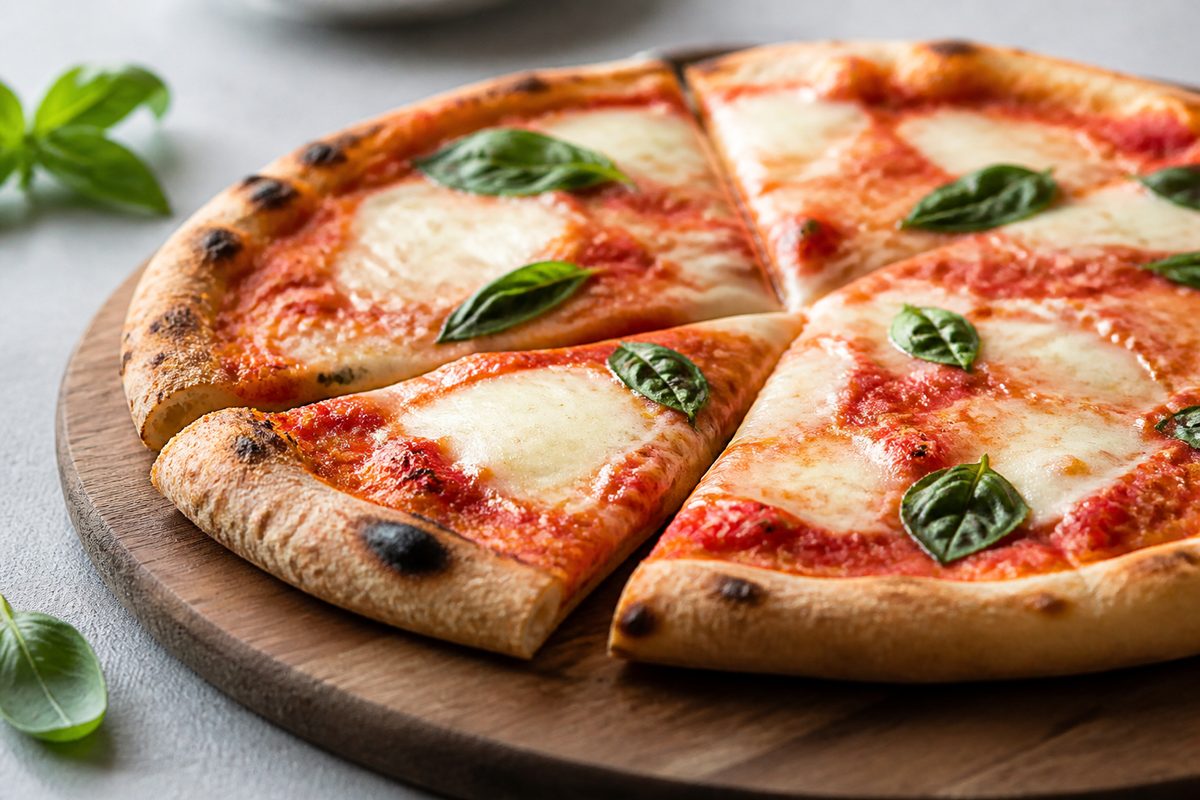
Yes — pizza can cause or worsen bloating. A typical pizza stacks wheat, fat, salt, cheese, and often onion or garlic in one large meal. Among foods linked to bloating in Eat Smart Kiwi community data, pizza ranks #46.[1][2][3]
Why pizza causes bloating
Bloating after pizza is usually more than one ingredient at once:
- Wheat crust: Traditional bases are wheat flour, a major source of fructans (a FODMAP). These short-chain carbohydrates are poorly absorbed in the small intestine. In the colon, bacteria ferment them and produce gas, which can stretch the bowel and feel like bloating and wind.[1][2]
- Fat and portion: Cheese, oil, and several slices make a high-energy meal. Fattier, larger meals tend to leave the stomach more slowly, which can feel tight, heavy, and overly full.[3]
- Salt: Cheese, tomato sauce, and cured meats such as pepperoni are often high in sodium. In a feeding trial, higher sodium intake increased bloating, likely via extra fluid retention — a puffed feeling that is not the same as fermenting gas.[4]
- Cheese and toppings: Mozzarella and other dairy can add lactose for people who do not break it down fully. Onion, garlic, and mushroom toppings add more FODMAPs on top of the crust.[2][5]
Who is most affected
Tolerance varies:
- IBS and FODMAP sensitivity — wheat fructans plus onion or garlic on the same pizza can be a large fermentable load.[1][2]
- Lactose intolerance — a thick cheese layer is a different dairy-sugar load from a light sprinkle.[5]
- People sensitive to fatty or salty meals — a large, oily, heavily seasoned pizza can feel heavy even when the wheat itself is not the main issue.[3][4]
- Anyone stacking — pizza plus garlic bread, a fizzy drink, or a creamy dessert adds more volume, salt, and fermentable extras.[2][3]
What you can try
- Watch the portion — one or two slices is a different wheat, fat, and salt load from half a pizza.[3]
- Go easier on cheese and processed meat — less mozzarella and pepperoni lowers fat, lactose, and sodium at once.[4][5]
- Check onion and garlic — a simpler topping mix (or asking for no onion/garlic) is a useful diary contrast with a fully loaded pizza.[2]
- Compare crusts — a thinner wheat base, or a gluten-free base, still has cheese and salt; logging both shows whether your pattern is the wheat or the rest of the pizza.[1]
- Skip the fizzy drink — soda with a salty, fatty meal adds liquid volume.[3]
Eat Smart Kiwi community data
Among foods linked to bloating in Eat Smart Kiwi community data, pizza ranks #46. Pizza and bloating also ranks #77 among all food–symptom pairs tracked in the app.
The link is most often seen within about 8 hours of eating pizza, based on aggregated diary data from about 1,000 users. These are real-world logging patterns among people tracking digestive health; they are not a clinical trial and do not prove pizza caused bloating in every case — but they match what many people report after a salty, cheesy, wheat-based meal.
Why tracking helps you
Wheat vs gluten-free crust, extra cheese, onion or garlic, and how many slices you ate all change the picture. Logging the style and the rest of the meal next to bloating scores shows whether your pattern is fructans, lactose, fat, salt — or the toppings.
Summary
Pizza often contributes to bloating because wheat fructans, fat, salt, cheese, and fermentable toppings land in the same meal — and it shows up in Eat Smart Kiwi tracking. Smaller portions, simpler toppings, and your own diary are practical ways to keep the meal with less discomfort.
Track food and symptoms with Eat Smart Kiwi.
This article provides general information and is not intended as medical advice. Consult a healthcare professional or registered dietitian before making significant diet changes, especially if you have a diagnosed gastrointestinal condition or suspected coeliac disease.