Does chocolate cause bloating?
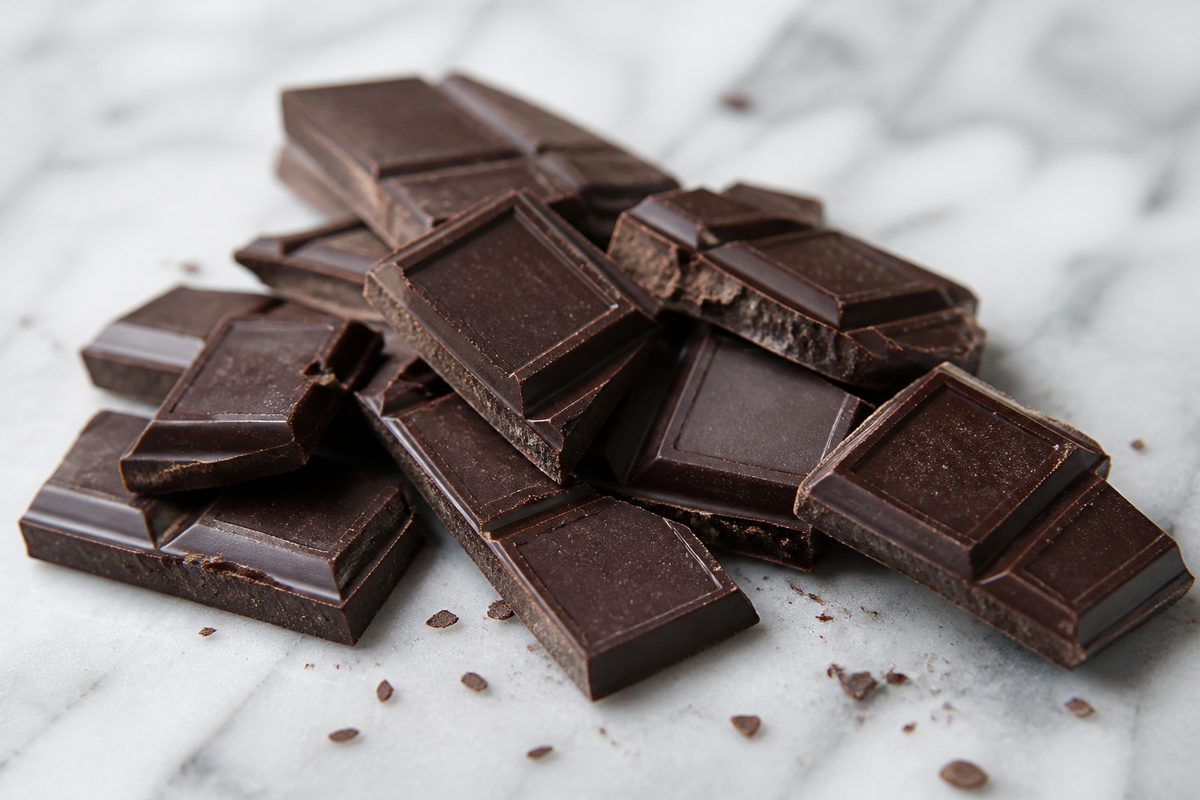
Yes — chocolate can cause or worsen bloating. It is high in fat, milk chocolate adds lactose, and sugar-free bars often use polyols that ferment in the gut. Among foods linked to bloating in Eat Smart Kiwi community data, chocolate ranks #40.[1][2][3]
Why chocolate causes bloating
Fat is part of the story for any chocolate. Higher-energy, fattier foods tend to leave the stomach more slowly, which can feel like a heavy, tight upper belly after a few squares or a whole bar.[4]
Milk chocolate also contains lactose, a fermentable dairy sugar (a FODMAP). If you do not break lactose down fully in the small intestine, it reaches the colon, where bacteria ferment it and produce gas — often felt as bloating and wind. Unabsorbed lactose can also pull water into the bowel.[2][3]
Sugar-free chocolate is a different trigger. In a controlled crossover study, 40 g of chocolate sweetened with lactitol or D-tagatose (20 g of the alternative sugar) caused more bloating, rumbling, colic, and flatulence than the same chocolate sweetened with ordinary sucrose. Most of those extra symptoms were rated as only slightly more than usual — but they were clearly more common than after regular sugar chocolate.[1]
A student survey also found more frequent chocolate intake went with worse gut-symptom scores (a weak-to-moderate link). The authors noted fat and, for some people, heartburn as possible extra reasons chocolate bothers a sensitive gut, and they flagged dark chocolate as a lower-FODMAP option than typical milk chocolate.[3]
Who is most affected
Tolerance varies:
- Lactose intolerance or low lactase — milk chocolate and other dairy-containing chocolate are the usual pattern.[2]
- IBS and FODMAP sensitivity — the same fermentable load can feel much more uncomfortable.[2][3]
- People eating sugar-free or “diet” chocolate — polyols such as lactitol (and similar sugar alcohols on the label) are poorly absorbed and ferment in the colon.[1]
- Anyone stacking triggers — chocolate plus a large fatty meal, milk, or other high-FODMAP foods can tip you over your personal threshold.[2][4]
What you can try
- Watch the portion — a square or two is a different fat and lactose load from half a bar.[3][4]
- Compare milk vs dark — dark chocolate is often lower in lactose than milk chocolate; fat is still there, so keep the serve modest.[3]
- Check sugar-free labels — maltitol, lactitol, sorbitol, and similar polyols can be the main wind trigger; ordinary sucrose chocolate may sit better.[1]
- Keep the rest of the plate simple — test chocolate on its own before pairing it with ice cream, milk, or a heavy dessert.[2]
Eat Smart Kiwi community data
Among foods linked to bloating in Eat Smart Kiwi community data, chocolate ranks #40. Chocolate and bloating also ranks #66 among all food–symptom pairs tracked in the app.
The link is most often seen within about 8 hours of eating chocolate, based on aggregated diary data from about 1,000 users. These are real-world logging patterns among people tracking digestive health; they are not a clinical trial and do not prove chocolate caused bloating in every case — but they match what many people report after a fatty, dairy, or polyol-sweetened treat.
Why tracking helps you
Milk vs dark vs sugar-free, portion size, and what else you ate all change the picture. Logging the type and amount next to bloating scores shows whether your pattern is fat, lactose, polyols — or something else on the plate.
Summary
Chocolate often contributes to bloating because fat can slow emptying, milk chocolate adds lactose, and sugar-free bars may use fermentable polyols — and it shows up in Eat Smart Kiwi tracking. Smaller portions, checking the type, and your own diary are practical ways to keep the treat with less discomfort.
Track food and symptoms with Eat Smart Kiwi.
This article provides general information and is not intended as medical advice. Consult a healthcare professional or registered dietitian before making significant diet changes, especially if you have a diagnosed gastrointestinal condition.