Does pasta cause bloating?
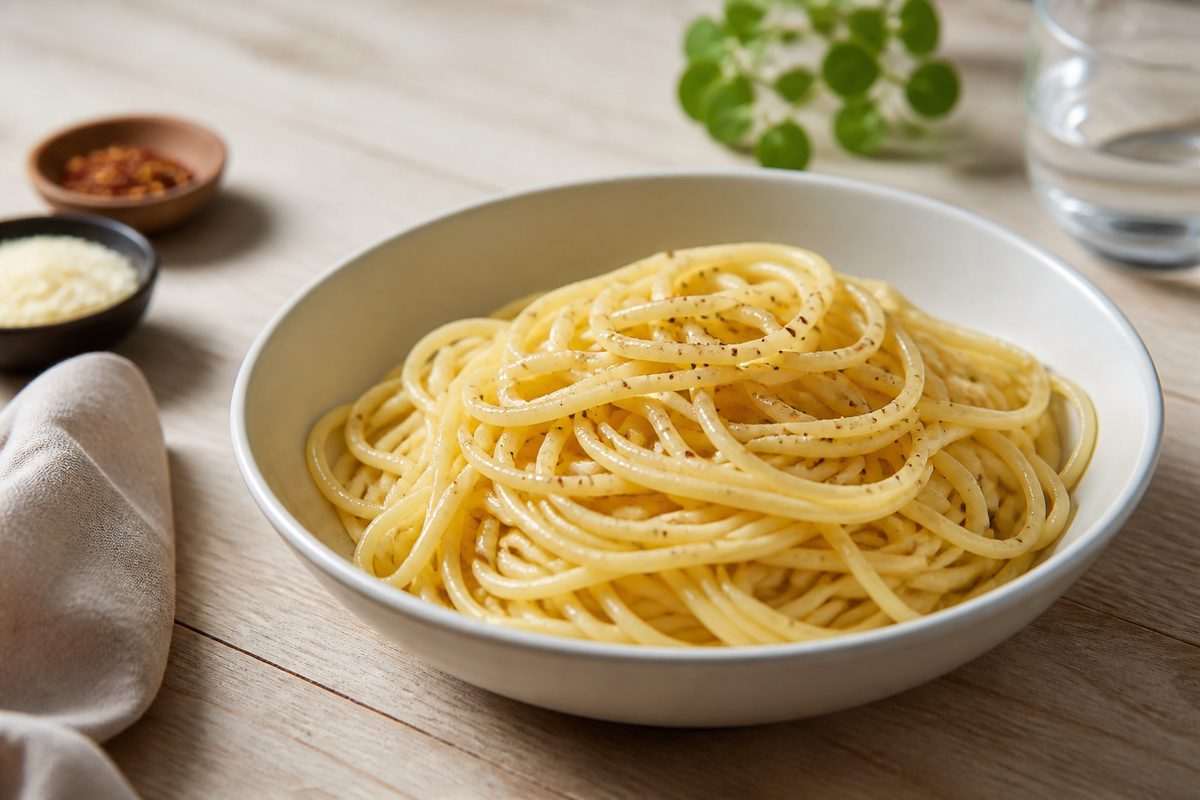
Pasta can cause or worsen bloating in some people, particularly people with IBS or sensitive digestion. Wheat pasta contains fermentable carbohydrates called FODMAPs, including fructans, which can contribute to intestinal gas.[1][2][6] Large portions and ingredients commonly eaten with pasta — such as garlic, onion, and rich sauces — can also contribute.
Eat Smart Kiwi's real-world data points in the same direction. Among more than 1,000 users with relevant diary data, pasta ranks #11 among foods associated with worse bloating in the 8 hours after eating pasta. Pasta and bloating also ranks #17 among all food–symptom pairs tracked in the app.
That doesn't mean everyone will feel bloated after pasta. The type of pasta, portion size, sauce, and individual sensitivity can all make a difference. Flour, pizza, and bread are logged separately.
Why can pasta cause bloating?
There isn't necessarily a single explanation.
Wheat pasta contains fermentable carbohydrates
Traditional pasta is usually made from durum wheat. Wheat-based pasta contains FODMAPs — fermentable carbohydrates that can contribute to digestive symptoms in susceptible people.[2][6]
Fructans, particularly fructooligosaccharides (FOS), are among the important FODMAPs found in pasta.[2] Grain analyses also pick wheat products out as a major everyday source of fructans.[6]
Humans have limited ability to digest fructans in the small intestine. They can therefore continue into the colon, where gut bacteria ferment them. This fermentation produces gases such as hydrogen, which can increase intestinal gas and contribute to bloating and abdominal distension.
This effect is particularly relevant for people with irritable bowel syndrome (IBS). In a controlled feeding trial, a diet low in FODMAPs reduced IBS bloating and other gastrointestinal symptoms compared with a typical Australian diet.[1]
Pasta can increase intestinal gas
Researchers have tested wheat versus other grains more directly.
Linlawan and colleagues compared meals of wheat noodles, rice noodles, and mung bean noodles in 20 people with non-constipation IBS. The wheat meal produced significantly more breath hydrogen and methane than rice or mung bean. Bloating and fullness scores were significantly higher after wheat than after rice. The bloating difference showed up clearly after lunch, not after breakfast. Compared with mung bean, bloating was higher after wheat but that contrast did not reach statistical significance.[3]
This was a noodle meal in IBS, not a bowl of durum spaghetti in everyone. It does not prove that every pasta dinner will cause bloating. It does provide experimental evidence for the mechanism: a wheat-based starchy meal can produce more intestinal fermentation and gas than an easily absorbed alternative such as rice in susceptible people.[3]
Is gluten the reason pasta makes you bloated?
Not necessarily.
People who feel better after avoiding wheat sometimes assume that gluten must be responsible. But wheat contains other components that can affect digestion, particularly fructans.
Fructans are FODMAP carbohydrates, while gluten is a protein. They are completely different substances.[1][6]
This distinction matters because reducing wheat also reduces both gluten and wheat fructans. Feeling better after switching away from wheat therefore doesn't by itself establish which component was responsible. A gluten-free pasta is often lower in those fermentable carbs as well as gluten — which is what the composition work on gluten-free pasta shows, not a pasta gluten-challenge trial.[2]
For people with coeliac disease, gluten needs to be strictly avoided for a different medical reason. Suspected coeliac disease still needs a doctor, not a DIY pasta swap. But in someone without coeliac disease who primarily experiences bloating after pasta, fructans and other characteristics of the meal are plausible explanations worth considering.[1]
How much FODMAP is actually in pasta?
The answer depends on the pasta and how it is prepared.
A 2025 study analysed the FODMAP content of commercially available pastas, with a focus on wholegrain products. Fructooligosaccharides were the dominant FODMAPs, and kestose was the main oligosaccharide in every sample. Almost all of the wheat pastas tested classified as high-FODMAP at typical serving sizes, including both a smaller Australian serve and a larger European one. Gluten-free pasta, and the buckwheat wholegrain pasta in the set, classified as low-FODMAP.[2]
However, cooking made a substantial difference.
Boiling reduced fructooligosaccharide levels considerably — by about 31% to 84%, depending on the product, shape, cooking time, and how much water was used. Shorter shapes lost more than spaghetti in that set. A smaller serve was more likely to fall into a low-FODMAP range than a large one.[2]
This is important because it means pasta isn't a fixed dose of FODMAPs. The grain, formulation, serving size, and cooking process can all affect how much reaches your plate.
Researchers have also been developing specifically low-FODMAP pasta (wheat starch and gluten, then fibre-fortified) aimed at people with IBS. That is product-development work, not a trial of supermarket spaghetti at dinner.[5]
Does portion size matter?
Very likely.
FODMAP-related symptoms depend partly on the total amount of fermentable carbohydrate consumed, so a small portion may be tolerated when a much larger serving isn't.[1][2]
There is also a simpler issue: pasta is often eaten as a large, dense meal. Larger, higher-energy meals empty from the stomach more slowly, so the upper gut stays fuller for longer — a heavy, tight feeling many people log as bloating.[4]
That means someone who feels fine after a small side serving of pasta may still feel bloated after a large bowl.
When testing pasta for yourself, portion size is therefore worth recording rather than treating every pasta meal as equivalent.
Could the sauce be causing the bloating instead?
Absolutely.
A pasta dish contains much more than pasta.
Common ingredients such as garlic and onion are themselves rich in fructans. Creamy sauces may cause symptoms in people who have difficulty digesting lactose, while rich or large meals can prolong fullness.[1][4] See does garlic cause bloating?.
A meal such as spaghetti bolognese might therefore combine:
- wheat pasta
- garlic
- onion
- a large portion
- cheese or other dairy
- substantial fat
Feeling bloated afterwards doesn't tell you which ingredient — or combination of ingredients — was responsible. Pizza is a different log in the app for the same reason: wheat plus fat, cheese, and toppings is not “just pasta.”
If you're trying to work this out, comparing a simple pasta meal with your usual sauce can be more informative than simply deciding that “pasta makes me bloated.”
Does the type of pasta matter?
It can.
Traditional wheat pasta and pasta made from rice, corn, or other grains have different carbohydrate compositions.
The Linlawan study provides an interesting comparison: in IBS patients, the rice-noodle meal produced substantially less intestinal gas than the wheat meal, and less bloating.[3] Rice is still its own diary food — rice is usually low-FODMAP in composition work, yet some Eat Smart Kiwi users still log bloating after it.
That doesn't mean rice pasta is guaranteed to prevent bloating, but trying a non-wheat pasta can help answer a useful question:
Is the problem pasta in general, or something about wheat pasta?
Wholegrain pasta can also have a different FODMAP profile from conventional pasta, and the FODMAP content varies between individual products. Flour is logged separately if the wheat is in bread, baking, or a sauce rather than a bowl of pasta.[2]
What do Eat Smart Kiwi users show?
Eat Smart Kiwi analyses food and symptom diaries to look for relationships between foods people eat and changes in their symptoms afterwards.
For pasta and bloating, the community analysis currently shows:
- #11 among foods associated with bloating
- #17 among all food–symptom pairs
- More than 1,000 users with relevant diary data
- An overall association with worse bloating
- An 8-hour window after eating pasta
This puts pasta relatively high among the foods associated with bloating in Eat Smart Kiwi diaries — not a mid-table curiosity.
These are observational diary data rather than a controlled clinical trial, so the association doesn't establish that pasta itself caused each episode of bloating. But the pattern is consistent with research showing that wheat-based starchy meals and their fermentable carbohydrates can increase intestinal gas and gastrointestinal symptoms in susceptible people.[1][3]
How can you tell if pasta causes bloating for you?
Instead of eliminating pasta after one uncomfortable meal, look for a repeatable pattern.
Try recording:
- what type of pasta you ate
- approximately how much
- what sauce and other ingredients were included
- when the meal was eaten
- when bloating began
- how severe the bloating became
You can also make simple comparisons.
If a smaller serving causes less bloating, quantity may be important.
If plain wheat pasta causes symptoms but rice pasta doesn't, something in the wheat pasta may be important.
If plain pasta is fine but garlic-heavy pasta sauce causes symptoms, the pasta itself may not be the main trigger.
The aim isn't necessarily to eliminate pasta. It's to work out which parts of the meal matter for you and what quantity you tolerate.
Eat Smart Kiwi is a food and symptom tracker app that looks for these relationships automatically. Record what you eat and how you feel, and Eat Smart Kiwi analyses your diary for statistical relationships between foods and later symptoms.
Track food and symptoms with Eat Smart Kiwi
This article is for general information only and is not medical advice. Persistent or severe bloating, unexplained weight loss, blood in your stool, or other concerning digestive symptoms should be discussed with a healthcare professional.