Does garlic cause bloating?
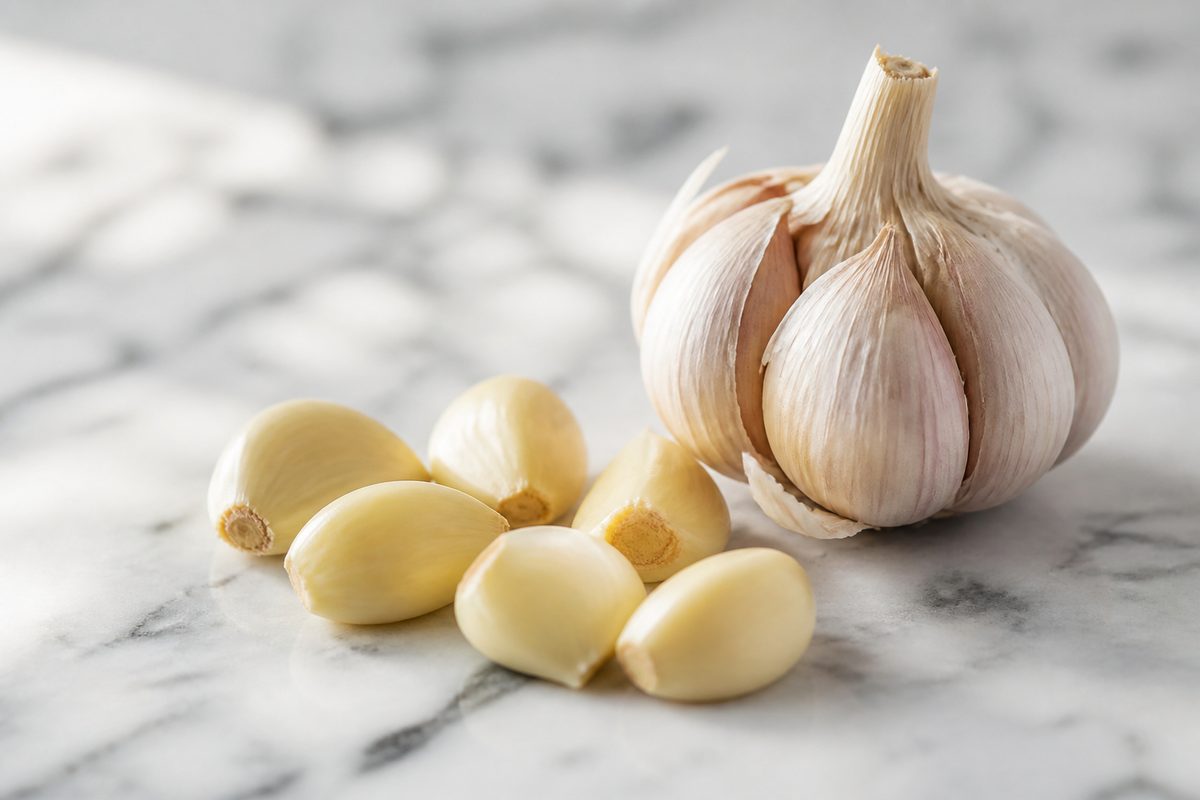
If you feel uncomfortably full or bloated after a meal with garlic, you are not alone. Garlic commonly causes bloating because it contains carbohydrates that many people cannot fully digest in the small intestine. These compounds pass into the large intestine, where gut bacteria ferment them and produce gas — leading to bloating and abdominal distension.[1]
Why garlic causes bloating
The main trigger is fructans, a type of FODMAP (fermentable carbohydrate) found in garlic.[1] Humans lack the enzymes to break fructans down in the small intestine, so they travel to the large intestine largely unchanged.[2]
There, gut bacteria ferment the fructans. That fermentation produces gas while also drawing water into the bowel — an osmotic effect that can make the abdomen feel stretched and uncomfortable.[1][2]
Garlic can also irritate sensitive stomachs in other ways:
- Raw garlic on an empty stomach can cause direct gastric discomfort, especially in larger amounts.[3]
- Sulfur compounds (released when garlic is crushed or chopped) give garlic its strong flavour but may add to digestive upset in some people.[3]
Fructan fermentation can feed beneficial gut bacteria too — so garlic is both a common bloat trigger and a prebiotic for others. For most people the issue is dose and individual tolerance, not garlic being harmful in an absolute sense.[2]
Who is most affected
Garlic is widely eaten and generally considered safe, but it is a well-known cause of gas and bloating.[2][3] You are more likely to notice symptoms if you have:
- Irritable bowel syndrome (IBS)
- Known FODMAP sensitivity
- A low symptom threshold for fermentable carbohydrates
Tolerance varies a lot. Some people react to a single clove; others only notice problems after a garlic-heavy meal or when several high-FODMAP foods are eaten on the same day.
What you can try
You may not need to cut garlic out entirely.
- Garlic-infused oil: Fructans are water-soluble, not fat-soluble, so they stay in the garlic clove and do not leach into oil. Infuse oil with whole garlic pieces, remove them, and use the flavoured oil for cooking.[1]
- Avoid raw garlic on an empty stomach: Eat garlic as part of a meal rather than on its own.[3]
- Use smaller portions: Try half a clove (or less) and increase slowly to find your limit.
- Try low-FODMAP flavour swaps: Garlic-infused oil, the green tops of spring onions, or chives can give a similar savoury note with less fructan load.[1]
- Watch FODMAP stacking: Garlic plus onion, beans, wheat pasta, or other high-FODMAP foods in the same day can push you over your personal threshold even when garlic alone would have been fine.
Eat Smart Kiwi community data
Among Eat Smart Kiwi users who log garlic, bloating is the #1 associated symptom for that food. Garlic and bloating also ranks #3 among all food–symptom pairs tracked in the app — one of the strongest patterns we see.
The link is most often seen within about 8 hours of eating garlic, based on aggregated diary data from more than 1,000 users. These are real-world logging patterns among people tracking digestive health; they are not a clinical trial and do not prove garlic caused bloating in every case — but they closely match what many people report in practice.
Why tracking helps you
Bloating triggers are often about combination and timing, not one food in isolation. You might tolerate a small amount of garlic in one meal but feel bloated when it is combined with onion, wheat, or a large high-fibre lunch earlier the same day.
Tracking food and symptoms together helps you spot those patterns — so you can eat more variety with less guesswork.
Summary
Garlic is a nutritious food that many people enjoy without problems, but its high fructan content makes it a common trigger for bloating — especially for those with IBS or FODMAP sensitivity. Finding your personal tolerance, watching how foods combine across the day, and tracking your own diary are the most reliable ways to know whether garlic affects you.
This article provides general information and is not intended as medical advice. Consult a healthcare professional or registered dietitian before making significant diet changes, especially if you have a diagnosed gastrointestinal condition.