Does halloumi cause bloating?
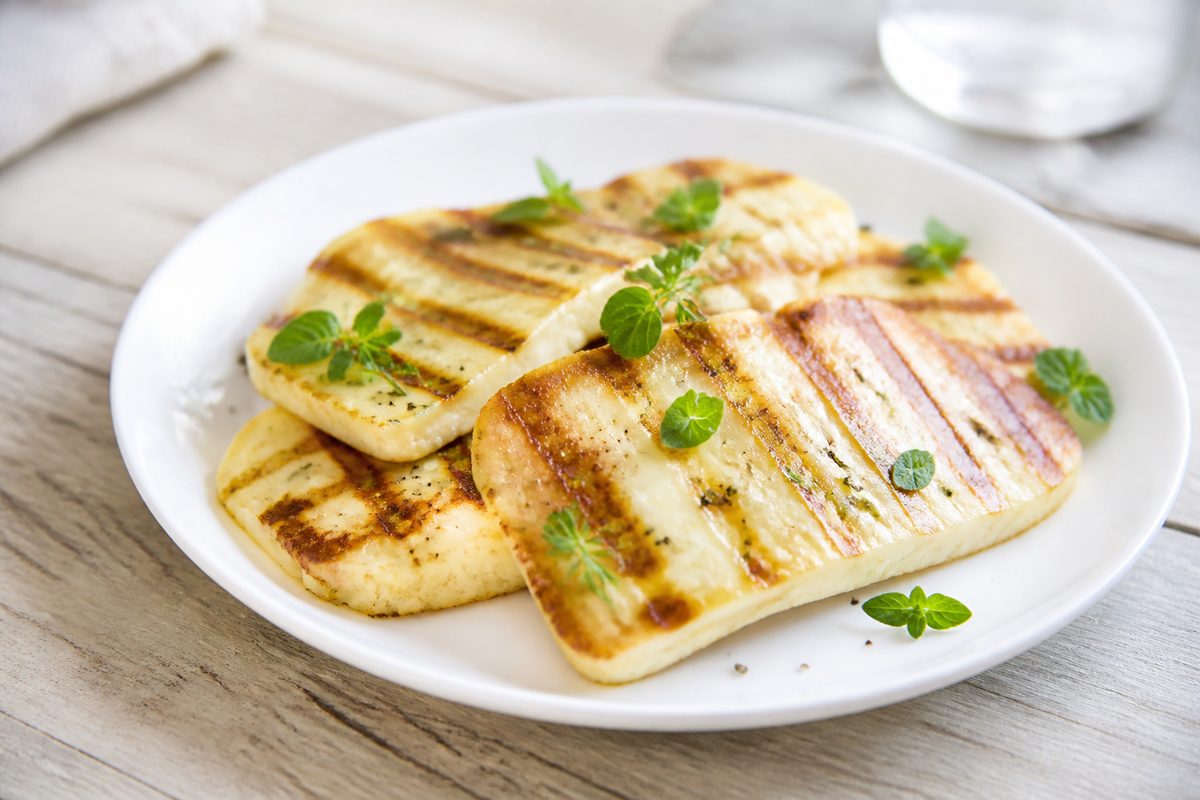
Yes — halloumi can cause or worsen bloating. It is a fatty, often fried cheese, so a slab can sit heavy even when lactose is modest. Among foods linked to bloating in Eat Smart Kiwi community data, halloumi ranks #63.[1][2]
That is a lower mid-table rank — not a top trigger — but halloumi is usually eaten as a thick grilled or pan-fried serve, often with oil, salad onion, or a large plate, not a thin sprinkle of hard cheese.
Why halloumi causes bloating
The usual problem is fat. Halloumi is energy-dense, and it is often cooked in extra oil or butter. Higher-fat meals empty from the stomach more slowly than lighter ones, so the upper gut stays fuller for longer — a heavy, stretched feeling that many people log as bloating.[1]
Lactose is a second pathway. Halloumi is a brined cheese, not a long-aged hard cheese like parmesan, so it still carries some milk sugar. If you do not make enough lactase, leftover lactose reaches the colon, where bacteria ferment it and produce gas.[2] That load is typically smaller than a glass of milk, but it can add wind on top of the fat.
People with IBS often feel that stacked load — fat plus a little lactose, often on a big salad — more strongly than others.[3]
What sits next to the cheese matters. Onion, garlic, watermelon, a wheat wrap, or a fizzy drink add FODMAPs and volume on top of the dairy.
In the app, halloumi is logged separately from generic cheese. A grilled halloumi salad is a different experiment from a sprinkle of cheddar.
Who is most affected
Tolerance varies:
- People sensitive to fatty meals — a thick fried slab can feel especially tight.[1]
- Lactose intolerance or low lactase — more likely if milk or soft cheese already bloat you; a small amount of aged hard cheese may still be fine.[2]
- IBS and FODMAP sensitivity — onion, garlic, or a large mixed salad may matter as much as the halloumi.[3]
- Anyone stacking — halloumi fried in oil, plus onion salad and bread, is a different load from a couple of dry-grilled slices.[1][3]
Lactase often falls after childhood, so halloumi that was fine years ago can start to bloat later.[2]
What you can try
- Shrink the portion — a couple of thin slices may be fine when a thick fried block is not.[1]
- Grill or bake without extra fat — halloumi is already rich; frying in oil or butter stacks more fat on the same cheese.[1]
- Keep the salad simple — test halloumi without onion, garlic, or a huge mixed plate so you can see what actually bloats you.[3]
- Compare with other cheeses in your diary — halloumi versus aged cheddar shows whether fat, lactose, or the cooking method is doing the work.[2]
- Eat it slowly — rushing a chewy, salty cheese is an easy way to swallow extra air on top of a heavy serve.
You do not have to drop halloumi forever. Finding the portion and cooking method you tolerate is the practical goal.
Eat Smart Kiwi community data
Among foods linked to bloating in Eat Smart Kiwi community data, halloumi ranks #63. Halloumi and bloating also ranks #104 among all food–symptom pairs tracked in the app.
The link is most often seen within about 8 hours of eating halloumi, based on aggregated diary data from about 300 users. These are real-world logging patterns among people tracking digestive health; they are not a clinical trial and do not prove halloumi caused bloating in every case — but they match what many people report after a fatty, often fried cheese serve.
Why tracking helps you
Dry-grilled versus pan-fried, a couple of slices versus a thick slab, and halloumi on its own versus halloumi on an onion salad all change the picture. Logging how you cooked it and how much you ate next to bloating scores shows whether your pattern is fat, lactose, portion — or the rest of the plate.
Summary
Halloumi can worsen bloating because it is high in fat (especially when fried) and still carries some lactose — and it shows up in Eat Smart Kiwi tracking. Smaller portions, less cooking fat, simpler pairings, and your own diary are practical ways to test what you tolerate.
Track food and symptoms with Eat Smart Kiwi.
This article provides general information and is not intended as medical advice. Consult a healthcare professional or registered dietitian before making significant diet changes, especially if you have a diagnosed gastrointestinal condition.