Does custard cause bloating?
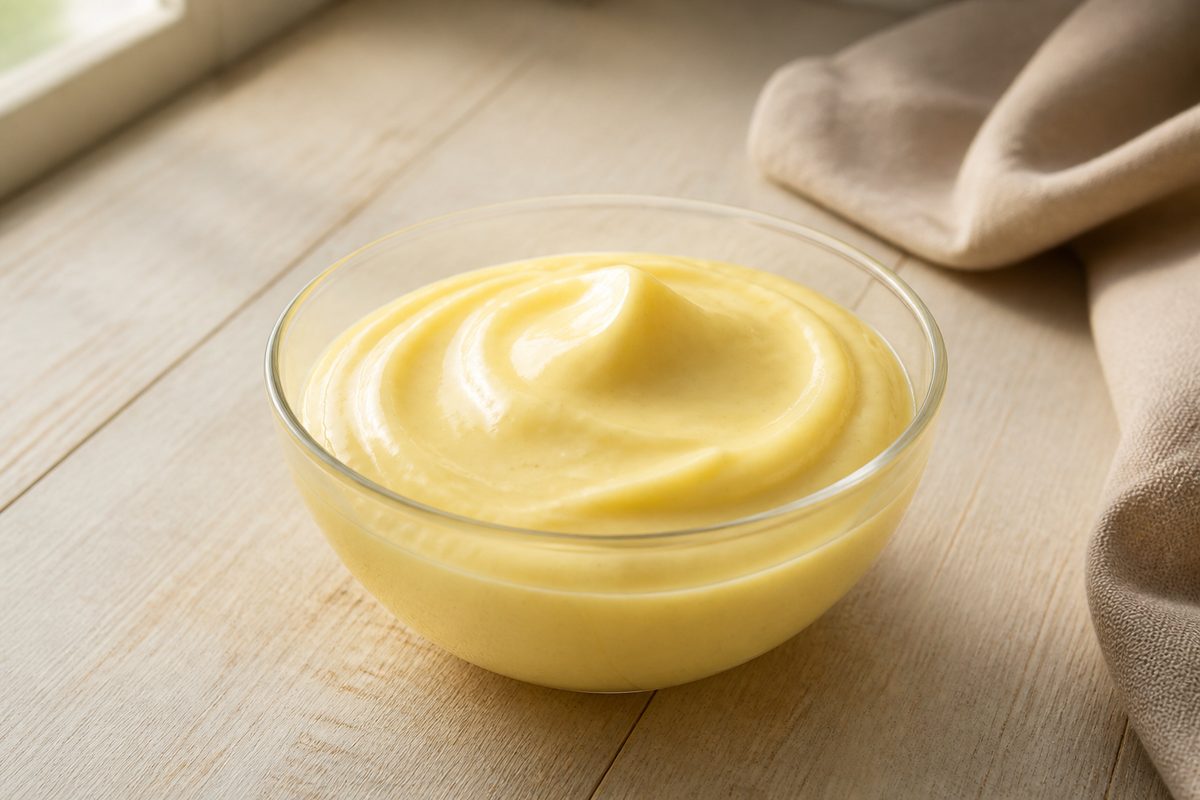
Yes — custard can cause or worsen bloating. A typical bowl is milk or cream (lactose) plus a high fat load, often poured over pie, sponge, or a roast pudding. Among foods linked to bloating in Eat Smart Kiwi community data, custard ranks #73.[1][2][3]
That is a lower mid-table rank — not a top trigger — but custard is a concentrated dairy dessert, not a splash of milk in tea.
In the app, custard is logged separately from milk, cream, ice cream, and cheesecake. Homemade crème anglaise, a supermarket carton, and powder-mix custard are different experiments.
Why custard causes bloating
Lactose is the main dairy pathway. Traditional custard is milk and cream, sometimes both. If you do not make enough lactase, leftover milk sugar reaches the colon, where bacteria ferment it and produce hydrogen and carbon dioxide — felt as bloating, wind, and a tight belly.[1] Lactase often falls after childhood, so a dessert that was fine years ago can start to bloat later.
A bowl of custard is a bigger lactose load than a splash in tea. Cream is mostly fat and lower in lactose than milk, but many recipes use a lot of milk as well.
Fat is the second pathway. Cream and egg yolks make custard energy-dense. Higher-energy, fattier meals empty from the stomach more slowly than lighter ones, so the upper gut stays fuller for longer — a heavy, stretched feeling many people log as bloating.[2] A few spoonfuls is a different fat load from a large jug over apple pie.
People with IBS often feel that stacked load — lactose plus fat, often on a wheat pudding — more strongly. Lowering FODMAP intake has been shown to reduce bloating.[3]
Shop cartons and “diet” custards can add thickeners, extra sugar, or polyols (sorbitol, maltitol). Those ferment as well.[3]
Plant-based custards skip lactose. They are not automatically gentle: coconut is still high in fat, oat drinks can carry fermentable carbs, and some recipes use inulin or polyols.
Who is most affected
Tolerance varies:
- Lactose intolerance or low lactase — a milk-and-cream bowl is a real sugar load.[1]
- People sensitive to fatty desserts — a large, rich serve can feel tight even when lactose is modest.[2]
- IBS and FODMAP sensitivity — custard plus pie, sponge, or a huge roast pudding stacks more fermentable carbs.[3]
- Anyone stacking — custard on apple pie after a fatty roast is a different experiment from a small plain bowl.[2][3]
What you can try
- Shrink the bowl — less lactose and fat at once.[1][2]
- Try lactose-free milk and cream — the sugar is already split; if you still bloat, look at fat and the rest of the dessert.[1]
- Consider lactase tablets — some people tolerate a serve better if they take lactase with it (ask a pharmacist if unsure).[1]
- Check sugar-free labels — maltitol, sorbitol, and xylitol can be the wind trigger.[3]
- Test custard on its own — without pie, sponge, or a fizzy drink, so you can see whether the custard is doing the work.[2][3]
- Compare plant-based — a useful diary contrast; oat or coconut is a different recipe, not a guaranteed free pass.[3]
You do not have to drop every custard. Finding which recipe and portion you tolerate is the practical goal.
Eat Smart Kiwi community data
Among foods linked to bloating in Eat Smart Kiwi community data, custard ranks #73. Custard and bloating also ranks #127 among all food–symptom pairs tracked in the app.
The link is most often seen within about 8 hours of eating custard, based on aggregated diary data from about 300 users. These are real-world logging patterns among people tracking digestive health; they are not a clinical trial and do not prove custard caused bloating in every case — but they match what many people report after a rich, dairy dessert.
Why tracking helps you
A few spoons versus a large bowl, homemade versus a carton, lactose-free versus ordinary, and custard on its own versus custard on pie all change the picture. Logging the type and amount next to bloating scores shows whether your pattern is lactose, fat, polyols — or the rest of the plate.
If you want to pinpoint whether custard or the pudding under it is setting off your digestion, try logging meals in the Eat Smart Kiwi food and symptom tracker.
Summary
Custard can worsen bloating because leftover lactose ferments and fat slows the stomach — and it shows up in Eat Smart Kiwi tracking, though it is not a top trigger. Smaller portions, lactose-free or simpler recipes, and your own diary are practical ways to keep it with less discomfort.
This article is for general information only and is not medical advice. If bloating is severe, painful, or persistent, see a doctor.