Does coleslaw cause bloating?
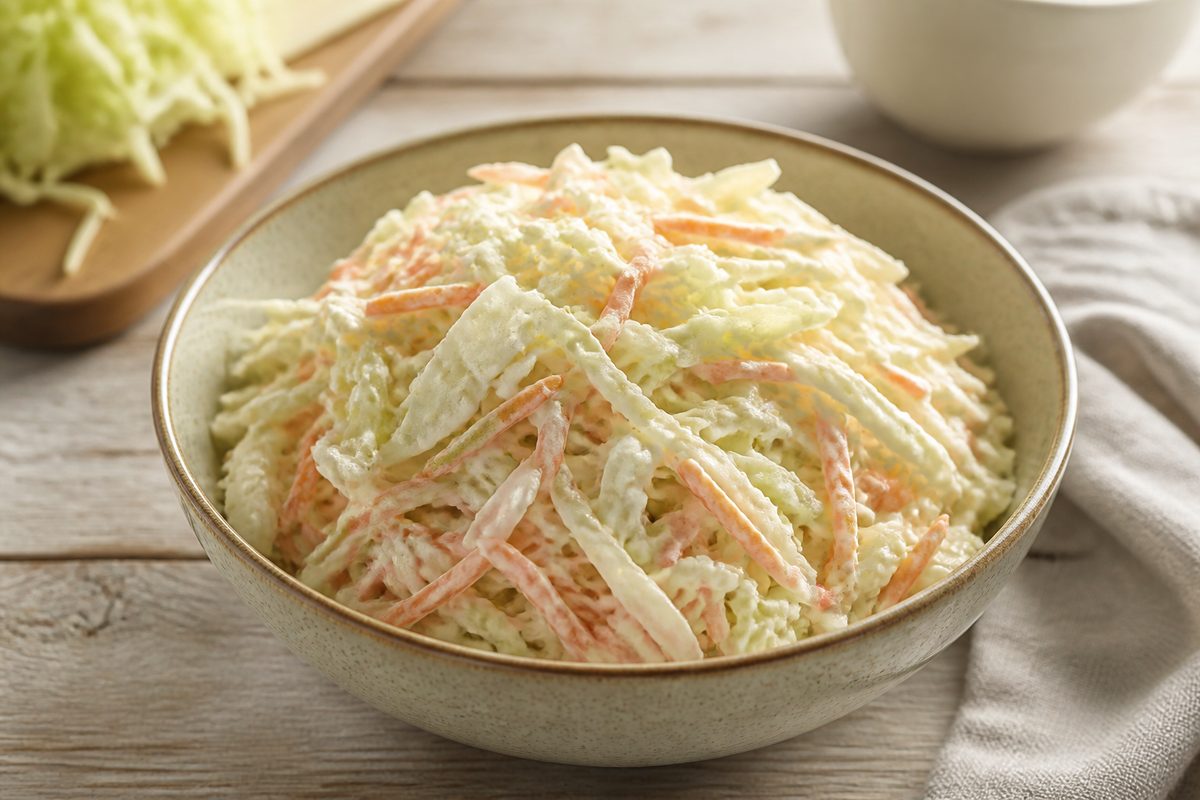
Yes — coleslaw can cause or worsen bloating. A typical bowl stacks raw cabbage with a fatty dressing, and often salt, onion, and a large barbecue plate. Among foods linked to bloating in Eat Smart Kiwi community data, coleslaw ranks #68.[1][2]
That is a lower mid-table rank — not a top trigger — but coleslaw is rarely one ingredient. The combination is the point: fermentable cabbage, mayo fat, and whatever else is on the plate.
In the app, coleslaw is logged separately from cabbage or mayo. A vinegar slaw and a creamy tub from the supermarket are different experiments.
Why coleslaw causes bloating
Cabbage is a cruciferous vegetable with fibre and fermentable carbohydrates (FODMAPs). Those short-chain carbs are often poorly absorbed in the small intestine. In the colon, bacteria ferment them and produce gas, which can stretch the bowel and feel like bloating and wind. A large raw pile is a bigger load than a few cooked shreds.[1]
Mayo or creamy dressing is the second pathway. Higher-energy, fattier meals empty from the stomach more slowly than lighter ones, so the upper gut stays fuller for longer — a heavy, tight feeling many people log as bloating.[2] A vinegar slaw skips most of that fat; a thick mayo coat does not.
Salt can add a third, different kind of puffiness. Higher sodium intake has been shown to increase bloating, likely through extra fluid retention — not the same as fermenting gas, but easy to mix up after a salty supermarket tub.[3]
Onion, garlic, or a sweetened dressing add more FODMAPs on top of the cabbage. People with IBS often feel that stacked load more strongly.[1]
What sits next to the slaw matters. A barbecue bun, sausages, beer, or a huge mixed plate is a different experiment from a small side of cabbage on its own.
Who is most affected
Tolerance varies:
- IBS and FODMAP sensitivity — raw cabbage plus onion or a large serve can be a big fermentable load.[1]
- People sensitive to fatty dressings — creamy coleslaw can feel tight even when the cabbage amount is modest.[2]
- People jumping up in fibre — a big raw bowl after a low-veg week can mean extra gas while the gut adapts.[1]
- Anyone stacking — slaw plus a wheat bun, beer, and a large meal is more than the cabbage.[1][2]
What you can try
- Shrink the serve — a garnish is a different FODMAP and fat load from a large side.[1]
- Try a vinegar slaw — less mayo means less delayed emptying; your diary shows if fat was the issue.[2]
- Skip onion if you usually react — cabbage on its own is a cleaner test.[1]
- Chew well — raw cabbage is tough; smaller pieces are easier to handle.
- Watch the rest of the barbecue — buns, beer, and sausages can mask whether the slaw is doing the work.[1][2]
You do not have to drop coleslaw forever. Finding the portion, dressing, and meals you tolerate is the practical goal.
Eat Smart Kiwi community data
Among foods linked to bloating in Eat Smart Kiwi community data, coleslaw ranks #68. Coleslaw and bloating also ranks #118 among all food–symptom pairs tracked in the app.
The link is most often seen within about 8 hours of eating coleslaw, based on aggregated diary data from about 400 users. These are real-world logging patterns among people tracking digestive health; they are not a clinical trial and do not prove coleslaw caused bloating in every case — but they match what many people report after a raw-cabbage, creamy side dish.
Why tracking helps you
Creamy versus vinegar, a forkful versus a bowl, onion or no onion, and slaw on its own versus slaw at a barbecue all change the picture. Logging the type and amount next to bloating scores shows whether your pattern is cabbage, fat, salt — or the rest of the plate.
Summary
Coleslaw can worsen bloating because raw cabbage ferments, mayo slows the stomach, and salt can add fluid retention — and it shows up in Eat Smart Kiwi tracking. Smaller portions, a lighter dressing, simpler pairings, and your own diary are practical ways to keep it with less discomfort.
Track food and symptoms with Eat Smart Kiwi.
This article provides general information and is not intended as medical advice. Consult a healthcare professional or registered dietitian before making significant diet changes, especially if you have a diagnosed gastrointestinal condition.