Does coffee worsen hunger?
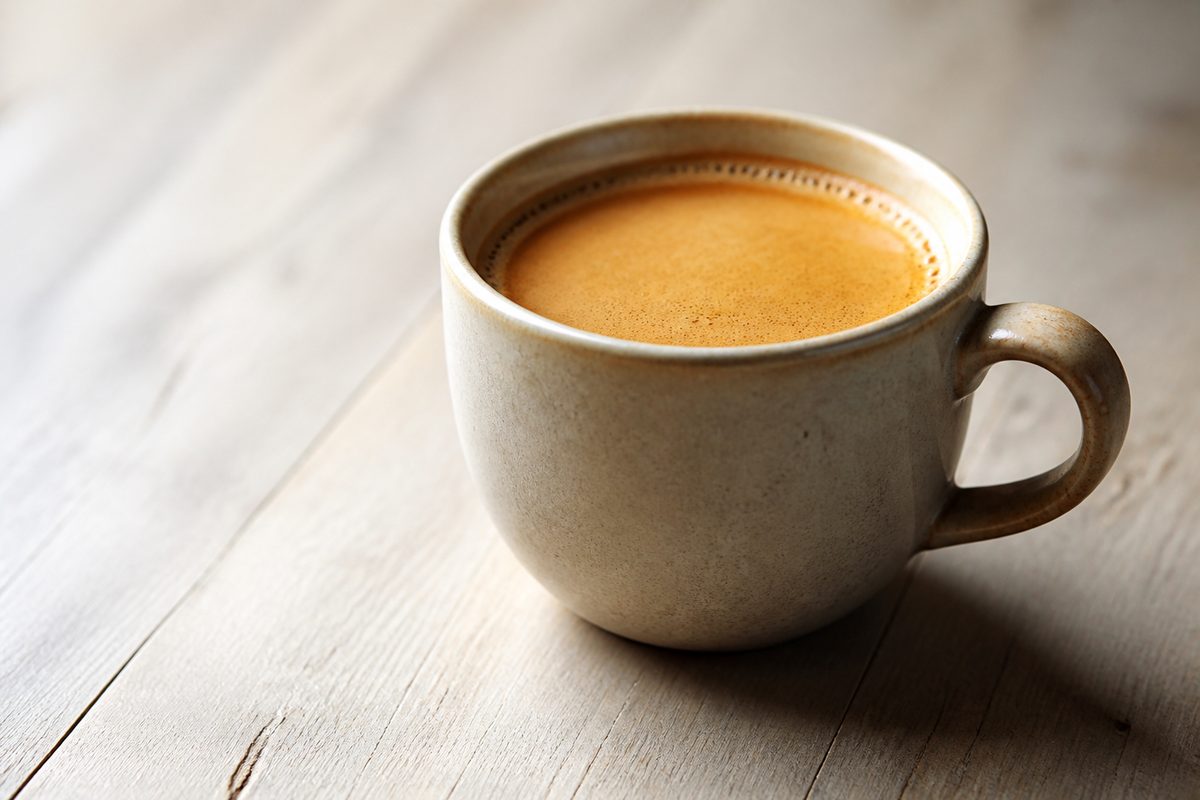
Yes — in Eat Smart Kiwi community data, coffee ranks #1 among foods linked to hunger, and the direction is that coffee worsens it.
That sits in contrast to clinical research, where coffee usually has little effect on appetite, and caffeine taken shortly before a meal may even trim later calorie intake.[1][2][3] Both can be true: diaries often catch a black cup instead of breakfast over about 8 hours, while trials usually serve coffee with a standard meal and measure hunger for a few hours. Community data is observational, not proof that coffee hormones switched hunger on.
Why trials rarely show coffee making you hungrier
A review of caffeine, coffee, and appetite found that coffee drunk 3–4.5 hours before a meal had little influence on later food intake. Isolated caffeine 0.5–4 hours before a meal may suppress acute energy intake. Evidence on gastric emptying, appetite hormones such as ghrelin, and how hungry people say they feel is mixed — not a clear “coffee turns on hunger” signal.[1]
In healthy men, caffeinated coffee with breakfast did not raise energy intake, hunger ratings, or inflammatory markers compared with control drinks in the hours that followed.[2]
A later crossover trial compared water with coffee providing 3 or 6 mg of caffeine per kg of body weight, drunk with breakfast. In overweight participants, the higher-caffeine coffee was followed by lower calorie intake at the next meal and over the day. Hunger and fullness ratings still did not change. Lean participants showed no intake effect.[3] Six milligrams per kg is a large caffeine load — not a small morning mug — so it is not a reason to drink more coffee to eat less.
Coffee is not a proven appetite suppressant either. The honest research summary is: little change, or a possible short dip in later eating, not a hunger spike.
Why you might still feel hungrier after coffee
If your diary shows worse hunger after coffee, the cup is often standing in for something else:
- Skipping breakfast: Many people drink coffee first thing and delay food. Caffeine can mask tiredness for a while. When that wears off, the calories you did not eat still need to come from somewhere. Trials that give coffee with breakfast will not catch that pattern; an 8-hour hunger score after a lone cup can.[1][2]
- What goes in the cup: Sugar, syrups, and sweetened milks are a different experiment from black coffee. A sweet spike then dip can feel like a crash. In the app, coffee, black coffee, coffee with milk, and decaf coffee are logged separately — use that.
- An empty stomach: A bitter, acidic cup on no food can feel gnawing. That may be the empty gut, not proof that coffee acid is a hunger hormone.
- Averages hide individuals: Trials report group means. Some people will still feel hungrier even when the average does not.[1][3]
Genetics of caffeine metabolism and bitter-taste type are sometimes mentioned as possible modifiers. The same review says those effects on appetite remain unknown — not a reason to blame your genes yet.[1]
Who is most likely to notice it
- People using coffee as breakfast — the pattern that matches an 8-hour hunger rise after a lone cup.[2]
- Sweet, large, or frequent cups — add-ins and extra caffeine are a different load from one black filter coffee.
- Anyone whose hunger returns mid-morning — compare coffee-only mornings with coffee plus eggs, yoghurt, or porridge.[2]
- Individual responders — overweight participants in one trial ate less after a high-caffeine coffee without feeling less hungry; your diary may not match that average.[3]
You do not need a diagnosis to notice it. You also do not need to drop coffee if breakfast, sugar, or the size of the mug is the actual issue.
What you can try
- Eat with the cup — protein and fibre (eggs, yoghurt, porridge) turn coffee-as-breakfast into coffee-with-breakfast, which is closer to the trials.[2][3]
- Keep add-ins simple — test black versus sugar, syrup, or a sweet milk so you can see what actually drives your hunger.
- Shrink the mug if you drink it alone — a small black coffee is a different experiment from a large sweet takeaway.
- Compare logs — coffee versus black coffee versus coffee with milk shows whether the bean, the milk, or the sugar is doing the work.
- Do not treat coffee as a meal replacement — trials do not show it reliably fills you; they mostly show it does not increase hunger when food is already there.[1][2]
You do not have to give up coffee. Finding when and how you drink it — and whether you eat with it — is the practical goal.
Eat Smart Kiwi community data
Among foods linked to hunger in Eat Smart Kiwi community data, coffee ranks #1 — and the direction is that coffee worsens hunger. Coffee and hunger also ranks #124 among all food–symptom pairs tracked in the app.
The pattern is most often seen within about 8 hours of drinking coffee, based on aggregated diary data from about 300 users. These are real-world logging patterns among people tracking food and how they feel; they are not a clinical trial and do not prove coffee caused hunger in every case — but they are a strong community signal for this pair, even though appetite trials usually find little change.
Why tracking helps you
When research averages and your mornings disagree, your diary is what matters. Black versus sweet, coffee instead of breakfast versus coffee with food, and a small mug versus a large takeaway all change the picture. Logging the cup next to hunger scores shows whether your pattern is the coffee, the skip, or the add-ins.
If you want to see whether coffee or the missing breakfast is setting off your hunger, try logging meals in the Eat Smart Kiwi food and symptom tracker.
Summary
Coffee ranks #1 among Eat Smart Kiwi foods linked to worse hunger, yet clinical trials usually find little appetite change — or a short dip in later calories. Skipping breakfast, sweet add-ins, and an empty-stomach cup can explain the gap. Eating with the coffee, simpler cups, and your own diary are practical next steps.
This article is for general information only and is not medical advice. If appetite change is severe, unexplained, or tied to weight loss you did not plan, see a doctor.