Does milk help with hunger?
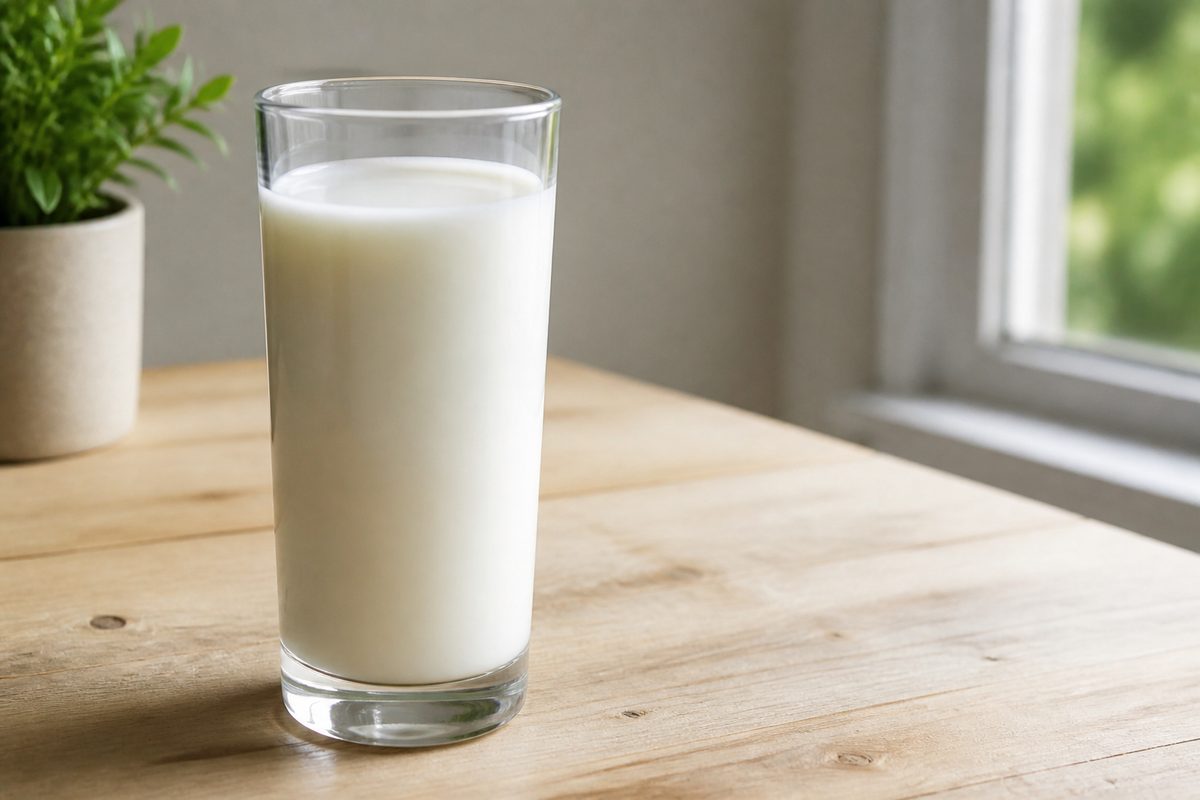
Yes — milk can help reduce hunger. A protein-rich glass with breakfast is typically more filling than an equal-calorie sugary drink, and people often eat a little less at the next meal. Among foods linked to hunger in Eat Smart Kiwi community data, milk ranks #6 — and the direction is that milk helps.[1]
Why milk helps with hunger
Milk supplies protein (whey and casein) as well as lactose and, in whole milk, fat. Protein is the part with the strongest satiety evidence.
In overweight adults, a fixed breakfast plus 600 mL of skim milk (about 25 g of protein) led to greater fullness through the morning than the same breakfast plus an equal-calorie fruit drink with almost no protein. At lunch four hours later, people ate about 8.5% less after the milk.[1] That is a large serve — closer to two glasses than a splash in tea — so a smaller glass may help less.
During a six-month weight-loss diet, obese women who added milk (versus an equal-energy rice drink) had a smaller rise in hunger and desire to eat. That trial was small (about a dozen people per group) and did not show a clear between-group difference in the hunger hormone ghrelin, so calcium or “hunger hormones” are not a proven extra mechanism beyond the protein-and-energy of the milk.[2]
If lactose bothers your gut, lactose-free milk still contains the protein that likely does most of the filling work.
Who is most likely to notice a benefit
- People swapping a sugary drink at breakfast — that is the comparison in the skim-milk trial.[1]
- Anyone hungry again by late morning — fullness after milk widened over the hours before lunch.[1]
- People eating less for weight loss — extra milk may blunt the usual rise in hunger, based on a small trial.[2]
- Individual responders — a splash in tea is a different protein load from 600 mL; your diary decides.
What you can try
- Have milk with breakfast — instead of juice or a fruit drink, if that is your usual pattern.[1]
- Use a real glass, not only a splash — the trial used 600 mL; start with a cup if that is more realistic.[1]
- Pair with oats or other food if you need longer stay-power — milk plus a meal is closer to the research breakfast than milk on an empty stomach.
- Try lactose-free if dairy bloating is an issue — you still get the protein.
- Compare in your tracker — milk versus juice, or a cup versus a sip, shows whether your hunger matches the studies.
Eat Smart Kiwi community data
Among foods linked to hunger in Eat Smart Kiwi community data, milk ranks #6 — and the direction is that milk helps (users tend to feel less hungry). Milk and hunger also ranks #36 among all food–symptom pairs tracked in the app.
The pattern is most often seen within about 3 hours of consuming milk, based on aggregated diary data from about 300 users. These are real-world logging patterns among people tracking food and how they feel; they are not a clinical trial and do not prove milk reduced hunger in every case — but they line up with satiety research on milk versus a sugary drink.
Why tracking helps you
Skim versus whole, a cup versus a mug, and milk on porridge versus milk alone all change how long fullness lasts. Logging how you drank it next to hunger scores shows whether your pattern matches the community trend.
Summary
Milk often helps with hunger because its protein makes a meal more filling than an equal-calorie sugary drink, and it ranks among Eat Smart Kiwi users for helping hunger. A proper glass with breakfast, lactose-free if you need it, and your own diary are practical next steps.
Track food and symptoms with Eat Smart Kiwi.
This article provides general information and is not intended as medical advice. Consult a healthcare professional or registered dietitian before making significant diet changes, especially if you have concerns about appetite, weight, or nutrition.