Does milk help with sleep?
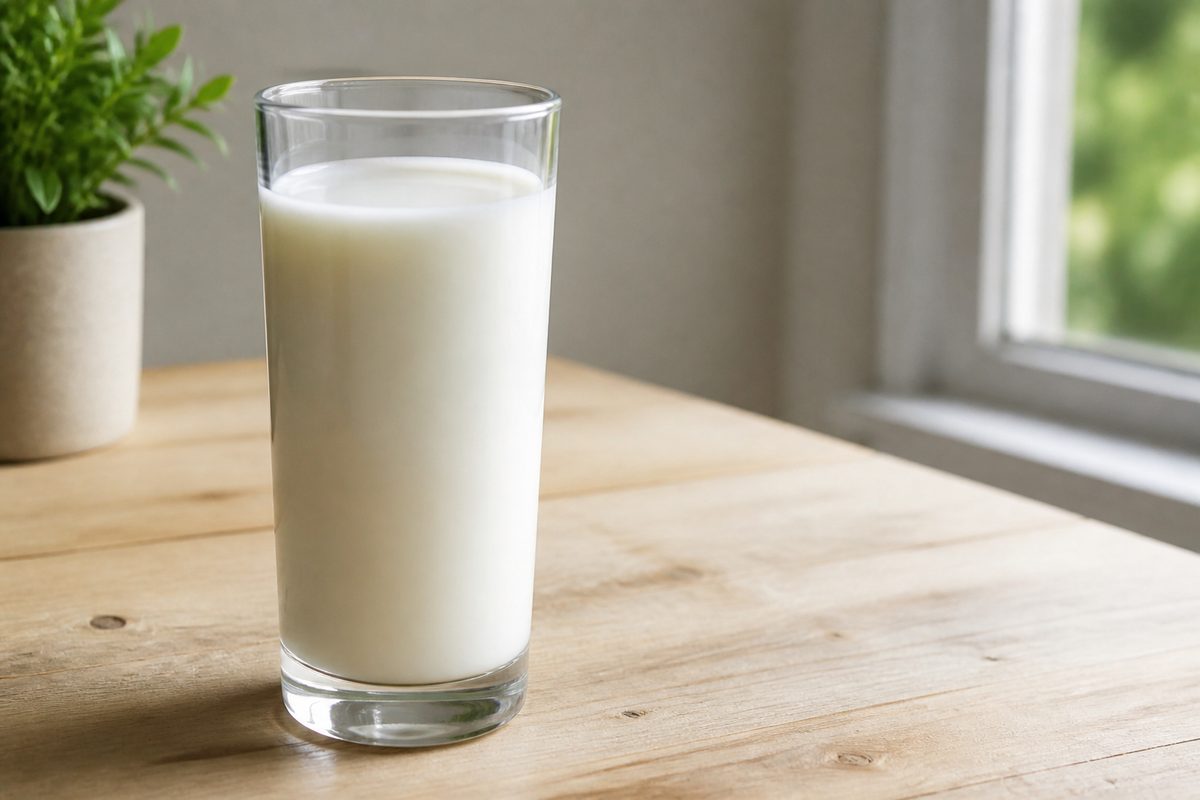
Yes — milk can sit with better sleep for some people. Among foods linked to sleep in Eat Smart Kiwi community data, milk ranks #1 — and the direction is that milk helps.
That is a strong rank among sleep foods from a small group of diaries, not a proven sleeping draught. A supermarket glass is not “night milk,” not a tryptophan capsule, and not a melatonin tablet.
Why milk might help
The honest picture is: Eat Smart Kiwi users who log milk often report better sleep scores in the following hours, and the bedtime-mug chemistry is still a mixed story.
Reviews of milk, yoghurt, cheese, and sleep find mixed trials, small samples, and limited quality. The authors did not run a meta-analysis. People who drink dairy also tend to have denser diets and better health habits, so dairy can be a marker of a calmer lifestyle as much as a sleep drug. One included study of milk at night did not improve sleep quality. The clearer sleep shifts were often tryptophan-enriched milks or malted drinks such as Horlicks — not plain milk from the fridge.[1]
A glass of ordinary milk does contain tryptophan. So do many other protein foods. Tryptophan competes with other large amino acids to enter the brain. Adding a biscuit or honey to “shuttle” tryptophan is the marketing logic behind sweet malted milks. It is not a proven insomnia protocol, and a high-glycaemic drink is not automatically better sleep.[1]
Night milk is a different product. In mice, milk collected at night looked sedating next to pentobarbital — that is not a human bedtime trial. In adults with mild insomnia, a melatonin-enriched milk powder (about ten times the melatonin of the control powder, still measured in nanograms) drunk for two weeks beat usual milk powder on a sleep-satisfaction rating. Insomnia severity and Pittsburgh sleep-quality scores improved on both powders, with no difference between them. That is a branded sachet 30 minutes before bed, not a mug of supermarket milk, and the extra melatonin is tiny next to a 0.3 mg tablet.[2]
Stories about Lactobacillus making GABA after a glass of milk, or anti-inflammatory peptides repairing sleep, are not a reason to treat dairy as a sedative. A later Cureus meta-analysis mixed milk with other dairy and is not a replacement for those caveats.
Eat Smart Kiwi diaries log milk and sleep in about eight hours. The night-milk powder trial was two weeks of a bedtime sachet. Both can be true: some users feel sleepier after milk, and the clinical picture is enriched or malted products, mixed ordinary-milk trials, and a warm-drink ritual.
Milk and hunger is a separate pair. If lactose keeps you up with a rumbling gut, see does milk cause diarrhoea?. Oat milk, lactose-free milk, and yoghurt are logged separately.
Milk will not replace treatment for chronic insomnia. Do not mix a large milky drink with alcohol as a sleep stack.
Who is most likely to notice a benefit
- People already having milk as an evening habit — that is closer to the diaries than a two-week powder protocol.[2]
- Anyone hoping ordinary milk matches night-milk trials — Bae compared two powders; usual milk did not lose on the main insomnia scales.[2]
- People who sleep well and also drink dairy — that can be the healthy-habit cluster in the reviews, not a mug effect.[1]
- Anyone with lactose intolerance — gut discomfort can cancel a bedtime ritual.
Sudden loud snoring, pauses in breathing, or sleep that is falling apart still need a doctor — not more milk.
What you can try
- If you test milk, use a normal glass — not a Horlicks-style sugar load and not a piperine-style supplement stack.[1]
- Do not chase “night milk” chemistry in the supermarket — that trial used a specialised powder with extra nanograms of melatonin.[2]
- Skip the biscuit-and-honey protocol — that is malted-drink marketing, not a tryptophan prescription.[1]
- If dairy upsets your gut, stop using it as a sleep tool — a rumbly night is not rest.
- Compare in your tracker — evening milk versus none, warm versus cold, and whether you also dropped caffeine, shows whether your pattern matches the community trend.
Eat Smart Kiwi community data
Among foods linked to sleep in Eat Smart Kiwi community data, milk ranks #1 — and the direction is that milk helps. Milk and sleep also ranks #90 among all food–symptom pairs tracked in the app — a lower mid-table overall rank, not a top pair across the whole food–symptom list.
The pattern is most often seen within about 8 hours of consuming milk, based on aggregated diary data from about 100 users. These are real-world logging patterns among people tracking food and how they feel; they are not a clinical trial and do not prove milk improved sleep in every case — and the sample is smaller than for many other pairs in the app.
Why tracking helps you
A warm mug as a wind-down cue, a glass at breakfast, malted milk, and lactose-free milk are different experiments. Logging when you drank milk next to sleep scores shows whether your pattern is the dairy, the bedtime ritual, or something you stopped drinking.
If you want to see whether milk or the rest of the evening is easing your sleep, try logging in the Eat Smart Kiwi food and symptom tracker.
Summary
Milk ranks #1 among Eat Smart Kiwi foods linked to better sleep, from a small diary group. Reviews of ordinary dairy and sleep are mixed. A melatonin-enriched night-milk powder beat usual milk on satisfaction ratings, not on standard insomnia scales, and the extra melatonin was in nanograms. A normal glass if you already like it, care with lactose, and your own diary are practical next steps.
This article is for general information only and is not medical advice. See a doctor for chronic insomnia, suspected sleep apnoea, or if sleep is getting worse. Check with a pharmacist before melatonin supplements if you take other medicines.