Does onion help with hunger?
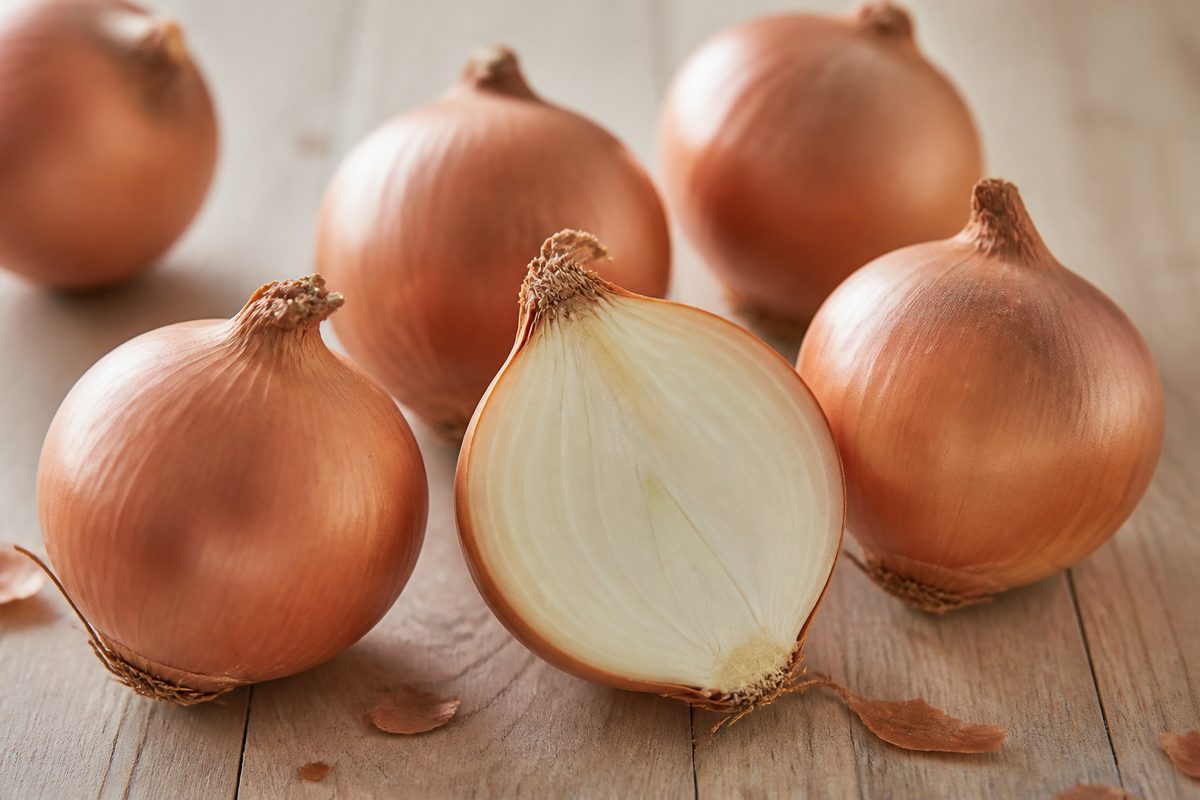
Yes — onion can sit with less hunger for some people. Among foods linked to hunger in Eat Smart Kiwi community data, onion ranks #8 — and the direction is that onion helps.
That is a solid community rank from a modest group of diaries, not a natural appetite-suppressant pill. Onion is mostly water with a modest amount of fibre. It usually shows up inside a cooked meal — a stew, curry, or stir-fry — not as a snack on its own. Red onion and spring onions are logged separately in the app.
Why onion might help with hunger
Volume is the simplest pathway. Onion is bulky and low in energy. Adding it to a pot increases the size of the meal without adding many calories. Fibre-rich, high-volume foods can take up space in the stomach and slow how quickly a meal leaves it, which can stretch fullness a bit longer.[1][2] Onion is not oats or beans. A typical cooking serve is a flavour base, not a high-fibre plate.
Higher-energy, denser meals empty more slowly than lighter ones — that is a fat-and-calorie story.[2] Onion itself is not fatty. The fullness after an oniony dinner is often the whole plate: the meat, beans, oil, and volume, with onion as the marker that you cooked a proper meal instead of grazing.
Fructans (inulin-type FOS) are the onion carbohydrate people talk about. Humans do not fully break them down in the small intestine. Bacteria ferment them in the colon. That is why onion is a classic gas and bloating food, especially in IBS.[3] Reviews that turn that fermentation into short-chain fatty acids and then into a reliable hunger-hormone effect are a long leap. It is not a reason to eat onion as a prebiotic appetite drug.
A rat study of red onion and broad beans is sometimes quoted for leptin and weight loss. That is not a human hunger trial, and it is not a reason to treat onion as a leptin supplement.
Onion rings, fried shallots, and a raw onion salad are different experiments from a diced onion in soup.
Who is most likely to notice a benefit
- People adding onion to a real meal — soup, stew, or a vegetable-heavy plate matches the volume story better than a lonely garnish.[1]
- Anyone swapping a low-volume snack for a cooked dish — the Eat Smart Kiwi pattern is most often seen within about 8 hours.
- People who already tolerate onion — if onion wrecks your gut, the hunger “help” is not worth the wind.[3]
- Individual responders — some still feel hungry soon after; the protein or beans in the same pot may be doing more than the onion.
Onion will not treat an eating disorder, unexplained appetite loss, or a medical weight problem.
What you can try
- Cook it into the meal — dice onion into soups, stews, and stir-fries if you want bulk, not a raw onion “supplement.”[1]
- Keep the serve modest if you have IBS — the same fructans that ferment can mean gas and bloating; green tops of spring onions or onion-infused oil are lower-fructan flavour swaps for some people.[3]
- Compare the plate, not only the onion — the same stew without a huge onion load (or with extra chicken or beans) shows what actually keeps you full.
- Do not use fried onion rings as the test — extra fat and batter change the meal.[2]
- Log red onion and spring onions separately if that is what you ate — they are different foods in the app.
You do not have to eat onion every day. Finding whether a cooked meal with onion keeps you going — without the bloating — is the practical goal.
Eat Smart Kiwi community data
Among foods linked to hunger in Eat Smart Kiwi community data, onion ranks #8 — and the direction is that onion helps. Onion and hunger also ranks #61 among all food–symptom pairs tracked in the app — a lower mid-table overall rank, not a top pair across the whole food–symptom list.
The pattern is most often seen within about 8 hours of eating onion, based on aggregated diary data from about 300 users. These are real-world logging patterns among people tracking food and how they feel; they are not a clinical trial and do not prove onion reduced hunger in every case.
Why tracking helps you
A flavour base in a stew, a pile of raw onion on a burger, fried onion rings, and a low-FODMAP oil swap are different experiments. Logging how you used onion next to hunger — and next to bloating if that is your issue — shows whether your pattern is volume, the rest of the meal, or a gut trade-off.
If you want to see whether onion or the rest of the pot is keeping you full, try logging in the Eat Smart Kiwi food and symptom tracker.
Summary
Onion often sits with less hunger in Eat Smart Kiwi tracking, at a solid rank for that symptom. The plausible path is volume in a cooked meal, not a leptin or prebiotic appetite drug. The same fructans can cause wind. Smaller cooked amounts, watching the rest of the plate, and your own diary are practical next steps.
This article is for general information only and is not medical advice. See a doctor if appetite change is severe, unexplained, or tied to weight loss you did not plan.