Does garlic cause belching?
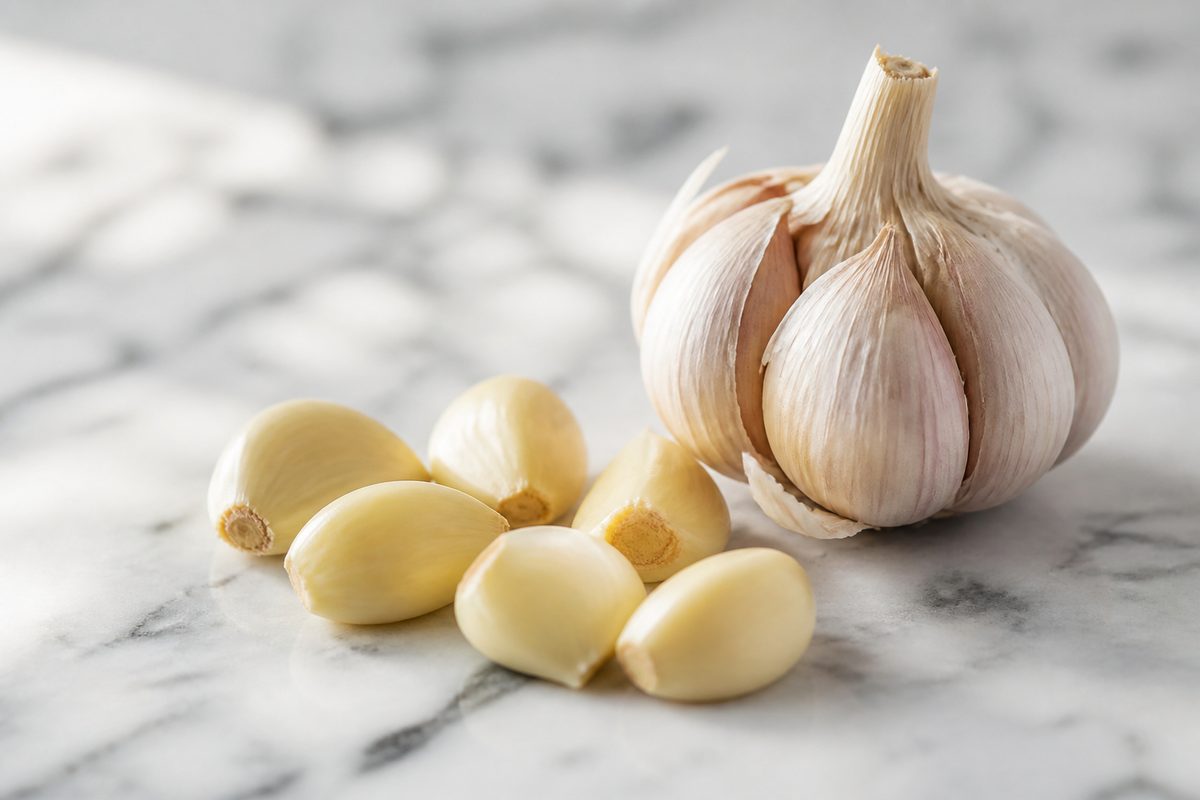
Yes — garlic can worsen belching. Among foods linked to belching in Eat Smart Kiwi community data, garlic ranks #13.
That is a solid rank for this symptom, not proof that a cooked clove always makes you burp. Cheese and salt both rank higher. Belching is air vented from the stomach or oesophagus. That is a different pathway from the fructan fermentation that makes garlic a top bloating food in the same app. For the tight, stretched feeling, see does garlic cause bloating?. For a burning chest, see does garlic cause heartburn?.
Why garlic can cause belching
Belching is how the stomach and oesophagus vent gas and pressure. Stretch of the stomach wall can trigger brief relaxations of the valve at the bottom of the oesophagus so air escapes upward.[1] Some people also suck air into the oesophagus and expel it without it ever reaching the stomach (supragastric belching).[1]
Garlic’s leftover fructans ferment in the colon. That is a bloating-and-wind story. It is a weak explanation for a burp from the upper gut.
Pungency and raw, concentrated garlic can be harsh on the lining. In dogs, raw garlic powder put onto the stomach lining caused erosion. Boiled powder caused reddening. Aged garlic extract did not.[2] That is animal work with powders, not garlic bread. It supports “raw or high-dose garlic can be harsh.” It does not prove that a little cooked garlic in a stew erodes your stomach.
Trials of garlic products most often report garlic breath and body odour. Gastrointestinal complaints — an upset stomach, and in some write-ups extra belching or wind — also show up, more with raw or high-dose preparations than with a small amount in food.[3] Smelly burps are easier to notice than a quiet, odourless one. That is not a randomised trial of “garlic versus no garlic for belching.”
What the garlic sits in often matters as much as the clove. Garlic bread, aioli, and a late oily pasta are high-fat meals. Higher-energy, fattier meals empty more slowly, so the stomach stays fuller for longer and there is more to vent.[4] Fast eating, talking while chewing, and fizzy drinks add swallowed air on top.[1]
Garlic-infused oil (cloves removed) is a useful FODMAP swap for bloating, because fructans stay in the clove. Pungent oils can still flavour the oil, so it is not a guaranteed belching fix.
Who is most likely to notice it
- Raw garlic or a large dose — empty-stomach cloves and supplements are harsher than a little cooked garlic in a meal.[2][3]
- People who already get reflux or a sensitive upper gut — a garlic-heavy, fatty meal is an easy way to add venting.[1][4]
- Anyone stacking — garlic plus onion, tomato, bread dunking, or a fizzy drink.
- People who bloat from garlic but do not burp — fructans and belching are different; your diary can split them.
You do not need a diagnosis to notice it. High-dose supplements can also interact with blood thinners — ask a pharmacist if that is you; that is a safety check, not a burp claim.[3]
What you can try
- Cook it, and keep the amount small — a little in a meal is a different load from raw cloves or a capsule.[2][3]
- Test garlic-infused oil if bloating is the main issue — useful for fructans; still watch belching separately.
- Watch the rest of the plate — garlic bread, creamy aioli, and onion-tomato sauce add fat, volume, and other burp pairings.[4]
- Eat slower, skip the fizz with the meal — less swallowed air.[1]
- Compare onion versus garlic — they often travel together; your log shows which one (or both) makes you burp.
You do not have to drop every savoury meal. Finding the form, amount, and extras you tolerate is the practical goal.
Eat Smart Kiwi community data
Among foods linked to belching in Eat Smart Kiwi community data, garlic ranks #13. Garlic and belching also ranks #213 among all food–symptom pairs tracked in the app — a lower mid-table overall rank, not a top pair across the whole food–symptom list.
The link is most often seen within about 8 hours of eating garlic, based on aggregated diary data from about 300 users. These are real-world logging patterns among people tracking digestive health; they are not a clinical trial and do not prove garlic caused belching in every case.
Why tracking helps you
Raw versus cooked, a pinch versus several cloves, garlic bread versus a clove in a stew, and garlic with onion versus garlic on its own all change the picture. Logging the form and the rest of the meal next to belching scores shows whether your pattern is the pungency, the fat, swallowed air — or the fructans showing up as bloating instead.
If you want to see whether garlic or the rest of the plate is driving your burps, try logging in the Eat Smart Kiwi food and symptom tracker.
Summary
Garlic can sit with more belching in Eat Smart Kiwi tracking, at rank #13 among belching foods. Fructans explain bloating more than burps. Raw or concentrated garlic can be harsh, garlic breath makes burps more obvious, and fatty garlic meals sit in the stomach longer. A smaller cooked amount, a simpler plate, and your own diary are practical next steps.
This article is for general information only and is not medical advice. See a doctor if belching is severe, persistent, or comes with trouble swallowing, weight loss, vomiting, or black stools.