Does cucumber cause belching?
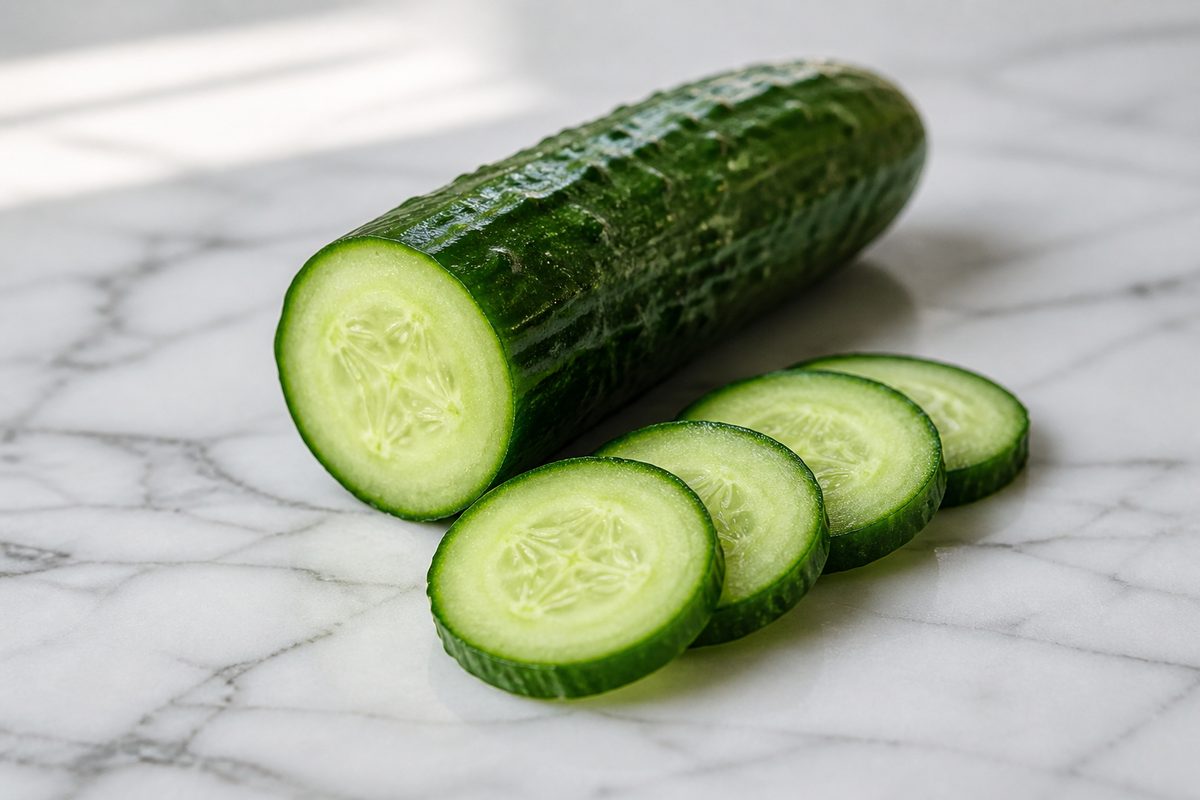
Yes — cucumber can worsen belching for many people, especially a large raw serve in a salad. Among foods linked to belching in Eat Smart Kiwi community data, cucumber ranks #7.[1][2]
Cucumber is mostly water, so a big handful is a sudden volume in the stomach. Crunchy eating also makes it easy to swallow extra air. Both stretch the upper gut until you burp. Bitter skin compounds and salad extras (onion, dressing) can add to the picture; they are not a proven “cucumber toxin” that always irritates the lining.
Why cucumber causes belching
Belching is how the stomach vents gas and pressure. Stretch of the stomach wall triggers brief relaxations of the valve at the bottom of the oesophagus so air can escape upward — that venting is a burp.[1]
Volume is the simplest pathway. Cucumber is high in water. A large serve, especially on top of a meal, fills the stomach quickly. Meal volume is one of the things that slows emptying and leaves you fuller for longer — more stretch, more need to vent.[2]
Swallowed air is the second. Raw cucumber is crunchy. Fast, airy chewing of salad is an easy way to gulp air that then comes back up as a burp.[1]
Skin, seeds, and bitterness are a practical extra, not a well-tested clinical mechanism. Older, bitter cucumbers (and the dark skin) contain cucurbitacins — plant defence compounds that taste bitter. “Burpless,” English, or Persian types were bred to be milder and thinner-skinned. That is horticulture and folk experience, not a trial proving cucurbitacin causes belching.
What sits next to the cucumber often matters more than the cucumber. Onion, garlic dressing, vinegar, and a fizzy drink are common salad stackers. People with IBS often feel that mixed load more strongly.[3]
Cucumber is usually a low-FODMAP vegetable in typical slices. If you burp after a salad, fermentation of cucumber sugar is less likely than volume, air, or the onion.
Who is most affected
Tolerance varies:
- Large raw serves — a few slices are a different volume from a big bowl.[2]
- Fast salad eaters — more swallowed air on top of the water load.[1]
- IBS or a sensitive upper gut — onion, garlic, or a huge mixed plate can do as much as the cucumber.[3]
- People who only eat unpeeled, seedy types — a useful diary contrast with peeled or “burpless” varieties, even if the chemistry is not proven.
You do not need a diagnosis to notice it. You also do not need to drop every salad vegetable if cucumber (or the onion) is the actual trigger.
What you can try
- Shrink the portion — thin slices instead of a large raw pile.[2]
- Eat more slowly and chew well — less swallowed air.[1]
- Peel and deseed if it sits heavy — a practical test; skin and seeds are the toughest, bitterest part for many people.
- Try English, Persian, or labelled “burpless” types — milder and thinner-skinned; your diary decides if they help.
- Test the salad, not only the cucumber — same meal without onion or garlic dressing shows what actually drives your burps.[3]
Eat Smart Kiwi community data
Among foods linked to belching in Eat Smart Kiwi community data, cucumber ranks #7. Cucumber and belching also ranks #110 among all food–symptom pairs tracked in the app.
The link is most often seen within about 8 hours of eating cucumber, based on aggregated diary data from about 300 users. These are real-world logging patterns among people tracking digestive health; they are not a clinical trial and do not prove cucumber caused belching in every case — but they match what many people report after a raw cucumber salad.
Why tracking helps you
Peeled versus unpeeled, a few slices versus a bowl, and cucumber on its own versus cucumber with onion dressing all change the picture. Logging how you ate it next to belching scores shows whether your pattern is volume, air, the cucumber itself — or the rest of the salad.
Summary
Cucumber can worsen belching because a watery, crunchy serve stretches the stomach and is easy to eat with extra air — and it ranks among the foods more clearly linked to belching for Eat Smart Kiwi users. Smaller portions, slower eating, simpler salads, and your own diary are practical ways to keep it with less burping.
Track food and symptoms with Eat Smart Kiwi.
This article provides general information and is not intended as medical advice. Consult a healthcare professional or registered dietitian before making significant diet changes, especially if you have a diagnosed gastrointestinal condition.