Does bread cause belching?
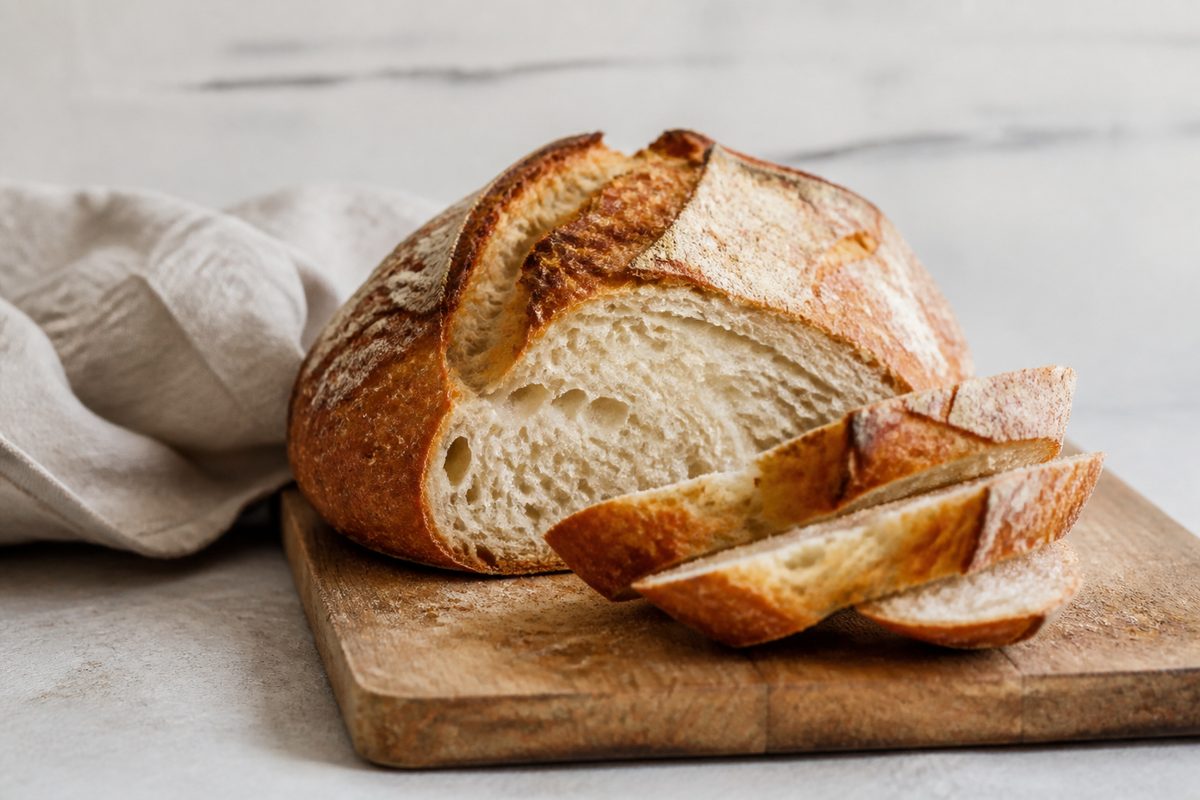
Yes — bread can worsen belching. Among foods linked to belching in Eat Smart Kiwi community data, bread ranks #9.
That is a solid rank for this symptom, not a universal “bread always makes you burp.” A dry sandwich eaten quickly is a different experiment from one thin slice, and gluten-free bread and toasted white bread are logged separately in the app.
Why bread can cause belching
Belching is how the stomach vents gas and pressure. Stretch of the stomach wall triggers brief relaxations of the valve at the bottom of the oesophagus so air can escape upward — that venting is a burp.[1]
Swallowed air is the everyday pathway. Dry toast, a thick sandwich, and fast eating are easy ways to gulp air that then comes back up. That can happen before any fermentation in the colon.[1]
Wheat fructans are the food-chemistry pathway. Most ordinary bread is wheat (sometimes rye). Those grains are a major source of fructans, a FODMAP. Humans do not fully break fructans down in the small intestine, so leftover carbohydrate is fermented by gut bacteria and can mean gas, bloating, and wind.[2][3] That is a stronger story for later fullness and wind than for an immediate burp — but it is why a large wheat load can sit badly.
In a small crossover in eight people with both GERD and IBS, wheat-noodle meals (high-FODMAP) produced more transient lower-oesophageal relaxations after lunch than rice-noodle meals, plus higher breath hydrogen and methane and higher scores for belching, bloating, satiety, and regurgitation.[4] That is wheat versus rice in a mixed meal, not a slice of toast in everyone — and the group was tiny. It supports a wheat/FODMAP link to burping in people who already have reflux and IBS; it does not prove every sandwich works the same way.
Gluten vs carbohydrates: Gluten is the wheat protein that matters in coeliac disease. For many people without coeliac disease who burp or bloat after bread, the fermentable carbs (fructans) are a more likely everyday trigger. A gluten-free loaf often helps because it also removes wheat fructans — not only because gluten is gone.[2][3] Some gluten-free breads add inulin or other fibres, so “GF” is not automatically low-FODMAP. Suspected coeliac disease still needs a doctor, not a DIY bread swap.
What sits on the bread matters. Butter, cheese, onion, garlic, and a fizzy drink add fat, lactose, extra fructans, and swallowed gas on top of the loaf.
Who is most affected
Tolerance varies:
- Fast or dry eaters — more swallowed air on a sandwich or toast.[1]
- IBS and FODMAP sensitivity — a larger wheat load is more likely to ferment and feel uncomfortable; lowering FODMAP intake has been shown to reduce IBS symptoms.[3]
- GERD overlapping with IBS — that is the group in the wheat-versus-rice meal study, where belching scores were higher after wheat.[4]
- Large servings — a thick sandwich plus more bread the same day is a bigger fructan and volume load than one thin slice.[2]
- Anyone stacking — bread plus onion, garlic, or a fizzy drink is a different experiment from plain toast.
What you can try
- Slow down and chew — less swallowed air is the simplest belch fix.[1]
- Watch the portion — one slice is a different load from a doorstep sandwich.[2]
- Compare rice-based or gluten-free options — a useful diary contrast for the wheat-fructan pathway; fillings may still be the problem.[2][4]
- Do not trust the word “sourdough” alone — a specially made lower-FODMAP rye loaf caused less colonic fermentation and milder wind than regular rye bread in one IBS trial. Ordinary supermarket sourdough is not the same product.[5]
- Test the filling — the same bread without onion, garlic, or a huge cheese layer shows what actually drives your burps.
- Stay upright after a big wheat meal — reclining can make pressure and burping feel worse.
You do not have to drop bread forever. Finding the type, portion, and pace you tolerate is the practical goal.
Eat Smart Kiwi community data
Among foods linked to belching in Eat Smart Kiwi community data, bread ranks #9. Bread and belching also ranks #146 among all food–symptom pairs tracked in the app — a lower mid-table overall rank, not a top trigger across the whole food–symptom list.
The link is most often seen within about 8 hours of eating bread, based on aggregated diary data from about 300 users. These are real-world logging patterns among people tracking digestive health; they are not a clinical trial and do not prove bread caused belching in every case.
Why tracking helps you
White versus wholemeal, one slice versus a sandwich, sourdough versus ordinary wheat, and bread alone versus bread with onion or cheese all change the picture. Logging the type and how you ate it next to belching scores shows whether your pattern is swallowed air, wheat fructans, the filling — or how much you had.
If you want to see whether bread or the rest of the plate is driving your burps, try logging in the Eat Smart Kiwi food and symptom tracker.
Summary
Bread can worsen belching because dry, fast eating adds swallowed air, and wheat fructans can ferment and, in people with reflux plus IBS, sit with more burping after a wheat meal than a rice meal. It ranks among the foods more clearly linked to belching for Eat Smart Kiwi users, though it is not a top pair overall. Smaller portions, slower eating, a wheat-versus-rice swap, and your own diary are practical next steps.
This article is for general information only and is not medical advice. See a doctor if belching is severe, persistent, or comes with trouble swallowing, weight loss, vomiting, or black stools — and before cutting gluten long term if you might have coeliac disease.