Does muesli cause diarrhea?
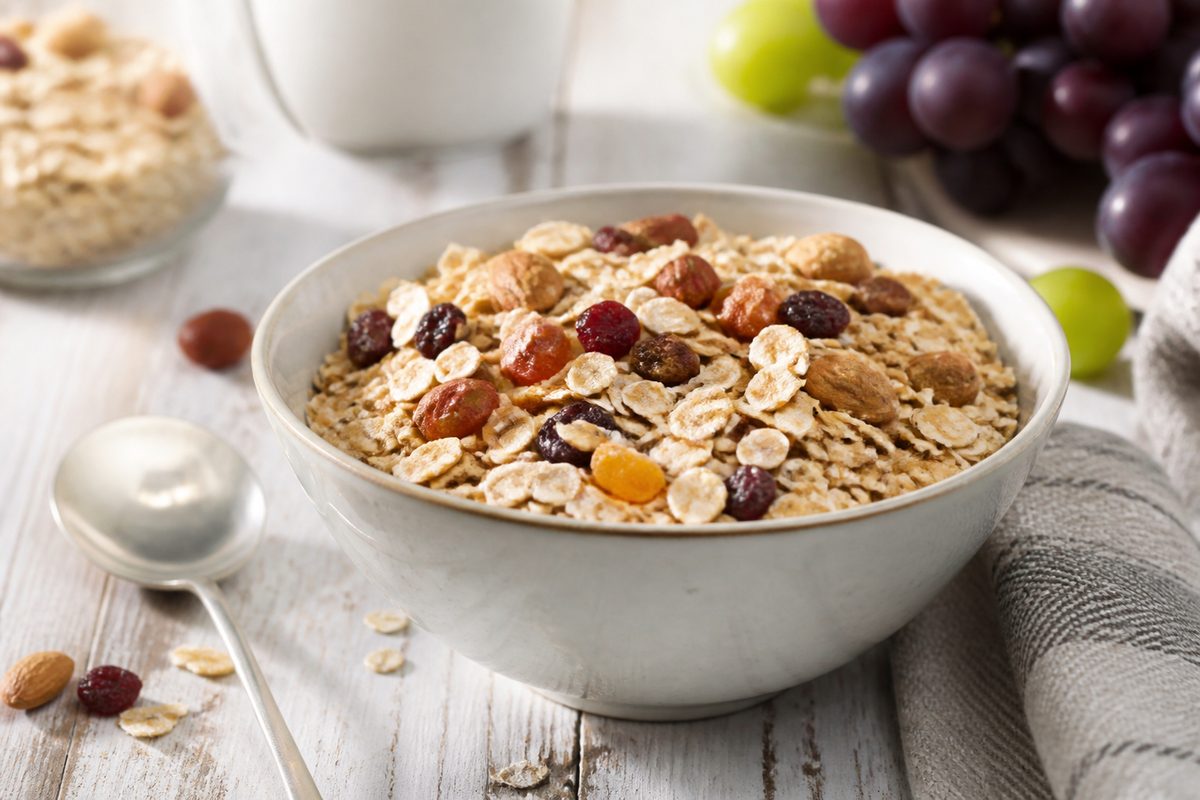
Yes — muesli can cause or worsen diarrhea. A typical bowl stacks a large fibre load with dried fruit, sometimes wheat or rye flakes, honey or other sweeteners, and often milk. Among foods linked to diarrhea in Eat Smart Kiwi community data, muesli ranks #5.[1][2]
Why muesli causes diarrhea
Muesli is not one ingredient. Loose stools after breakfast are usually about what is in the mix, and how much of it you eat at once:
- Dried fruit and sweeteners: Raisins, dried apple, apricot, dates, honey, and similar add-ins are often high in fructose or polyols (FODMAPs). Those sugars are poorly absorbed in the small intestine, so they pull water into the bowel (an osmotic effect) and can mean urgent, watery stools.[1][2]
- A large fibre hit: Oats, nuts, and seeds are nutritious, but a big bowl delivers a lot of fibre in one sitting. Extra fermentable residue can speed things along, especially if your usual breakfast is much lower in fibre.[1][3]
- Wheat or rye flakes: Some mueslis are not oats-only. Wheat and rye contain fructans, which ferment and can add to gut symptoms in sensitive people.[3][4]
- The milk: Cow’s milk on the bowl adds lactose. If you do not break that sugar down fully, it draws water into the bowel in the same osmotic way — and it may be the milk, not the cereal, doing most of the work.[5]
Plain cooked oat porridge is a different breakfast: oats themselves are generally low in FODMAPs. The dried fruit, wheat flakes, honey, and milk are more often the diarrhea triggers than the oats alone.[1][4]
Who is most affected
Tolerance varies:
- IBS, especially IBS-D — osmotic FODMAPs and a large fibre load can mean more urgency.[1][3]
- Lactose intolerance — the same muesli may sit better with lactose-free or plant milk.[5]
- People jumping to a huge high-fibre bowl — a sudden increase from a low-fibre breakfast can loosen stools.
- Anyone stacking — muesli plus apple juice, honey, or a large glass of milk stacks several osmotic loads.[1][5]
What you can try
- Check the fruit and sweetener — a simpler oat mix, or fresh berries instead of raisins and dried apple, is a useful diary contrast.[2]
- Watch the portion — a smaller bowl is a different fibre and FODMAP load from a packed serve.[1]
- Test the milk separately — lactose-free or a plant milk versus cow’s milk shows whether dairy is the main issue.[5]
- Compare with porridge — cooked oats without dried fruit often feel different from cold muesli; overnight soaking softens texture but does not remove FODMAPs.[3]
- Read “high-fibre” labels — added inulin or chicory root fibre is a concentrated FODMAP that can loosen stools on its own.[1]
Eat Smart Kiwi community data
Among foods linked to diarrhea in Eat Smart Kiwi community data, muesli ranks #5. Muesli and diarrhea also ranks #81 among all food–symptom pairs tracked in the app.
The link is most often seen within about 3 hours of eating muesli, based on aggregated diary data from about 300 users. These are real-world logging patterns among people tracking digestive health; they are not a clinical trial and do not prove muesli caused diarrhea in every case — but they match what many people report after a high-fibre, fruit-sweetened breakfast, especially with milk.
Why tracking helps you
Oats-only versus a fruit-and-honey mix, cow’s milk versus lactose-free, and bowl size all change the picture. Logging the brand and what you poured on it next to stool scores shows whether your pattern is dried fruit, wheat, lactose — or the fibre load.
Summary
Muesli often contributes to diarrhea because dried fruit, sweeteners, a large fibre serve, wheat flakes, and milk can all pull water into the bowel or ferment — and it ranks among the more common diarrhea-linked foods for Eat Smart Kiwi users. A simpler mix, a smaller bowl, checking the milk, and your own diary are practical ways to keep breakfast with less urgency.
Track food and symptoms with Eat Smart Kiwi.
This article provides general information and is not intended as medical advice. Consult a healthcare professional or registered dietitian before making significant diet changes, especially if you have a diagnosed gastrointestinal condition or ongoing diarrhea.