Does butter cause diarrhea?
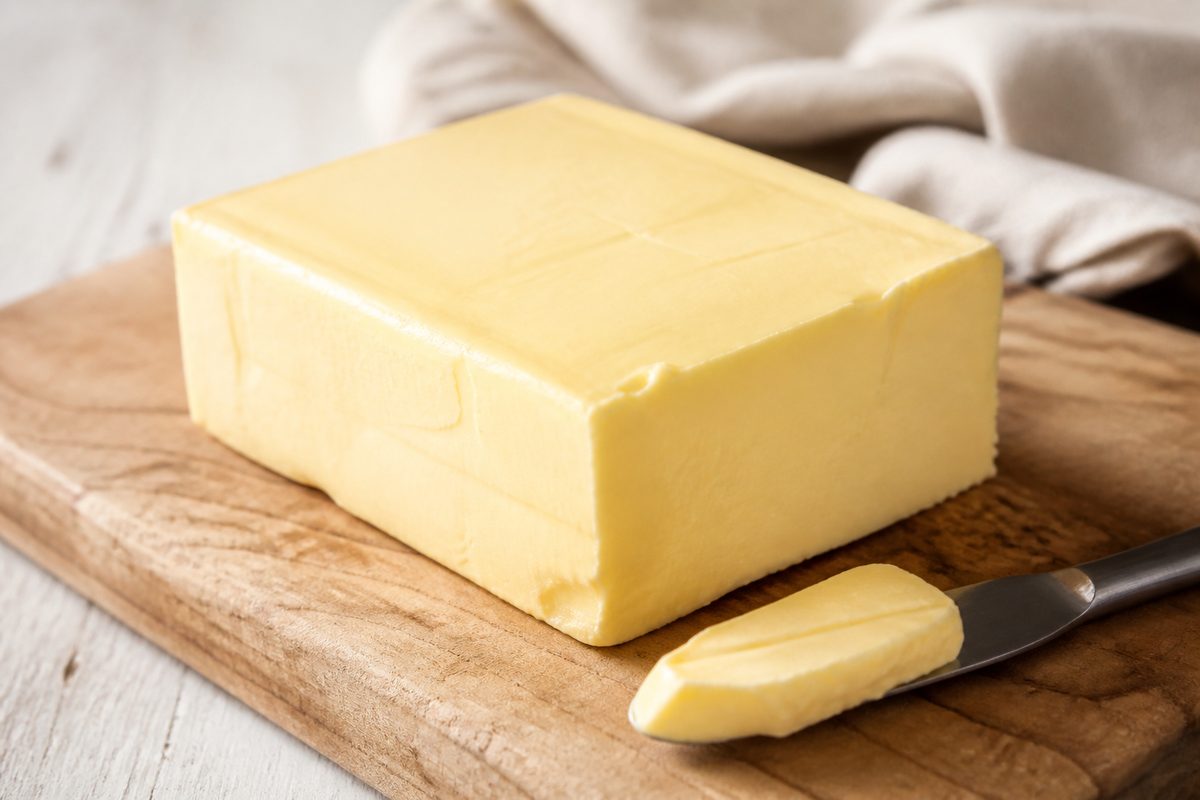
Butter can cause or worsen diarrhea in some people. It is almost pure fat. A large fat load can increase bile delivery into the gut; if those bile acids are not fully reabsorbed, they reach the colon and pull water in, which can mean urgent, loose stools.[1][2]
Eat Smart Kiwi's real-world data points in the same direction. Among more than 1,000 users with relevant diary data, butter ranks #14 among foods associated with worse diarrhea in the 3 hours after eating butter. Butter and diarrhea also ranks #274 among all food–symptom pairs tracked in the app — a lower mid-table overall rank, not a top pair across the whole food–symptom list.
That does not mean a scrape of butter on toast will send everyone to the bathroom. Portion size, what else is on the plate, and whether you already have a sensitive gut or bile-acid diarrhoea all matter. Milk, peanut butter, and other dairy foods are logged separately. For burps after a rich spread, see does butter cause belching?.
Why can butter cause diarrhea?
There isn't a single explanation, and fat does not speed food out of the stomach. Higher-energy, fattier meals empty from the stomach more slowly, not faster.[4] The diarrhea story is mainly what fat does downstream: bile, the colon, and in some people an exaggerated response to a fatty meal.
Fat, bile acids, and watery stools
Bile acids help digest fat. Most of them are reabsorbed in the last part of the small intestine and reused. When extra bile acids spill into the colon, they can stop the colon absorbing water — and can even make it secrete water and salt. In perfusion studies in healthy volunteers, dihydroxy bile acids in the colon produced reversible water and electrolyte secretion.[1]
A high-fat meal is a stronger stimulus for bile release than a low-fat one. In people with proven bile acid malabsorption (SeHCAT retention under 20%), cutting daily fat from about 62 g to 42 g reduced urgency, bowel frequency, and related gut symptoms. That was a dietitian-led fat reduction in a clinic population — many after cancer treatment — not a trial of supermarket butter at breakfast. It still shows that fat load can matter when bile acids are already a problem.[2]
Butter is about 80% fat. A thick layer on toast, garlic bread, or a buttery sauce is a concentrated fat dose in a few bites.
IBS and fatty meals
People with IBS often notice symptoms after meals. Fat is a main chemical stimulus for the gastrocolonic response — the colon reacting after food hits the upper gut. In IBS, duodenal lipid can heighten rectal sensitivity more than in people without IBS. That is a lipid-infusion study, not a butter-on-toast trial, but it is a reason a rich, buttery plate can feel like an urgent flare in someone who already has IBS.[3]
Do not treat a food questionnaire in which IBS patients name fatty foods as a butter challenge.
Is it the dairy, not the fat?
Usually the fat is the likelier everyday pathway.
Butter starts as cream and is churned until most of the watery buttermilk is gone. What remains is mostly milk fat, with only trace lactose and milk protein. Lactose diarrhea is a real, common story for a glass of milk. A knob of butter is a tiny lactose load next to that glass. If milk wrecks you and a scrape of butter does not, that fits lactose much better than “all dairy is the same.”
A confirmed cow’s-milk protein allergy can theoretically react to leftover casein in butter. Isolated loose stools after toast, without hives, swelling, or breathing trouble, are a less typical sole presentation of allergy.
Ghee has had the milk solids cooked off, so it is even lower in lactose and casein — but it is still almost all fat. If bile acids or fat load are driving the diarrhea, swapping to ghee is unlikely to fix it.
Who is most likely to notice it?
- People with bile acid diarrhoea or malabsorption — extra fat can mean extra bile reaching the colon.[1][2]
- After gallbladder removal — bile drips more continuously instead of being stored and released in a measured pulse; fatty meals are a classic trigger in that setting.[2]
- IBS, especially IBS-D — a fatty meal can heighten the colon’s response.[3]
- Anyone stacking fat — butter plus cream, cheese, pastry, or fried food is a different experiment from a thin spread.[2][4]
- Large portions — a tablespoon in cooking is not a garlic-bread slab.[4]
You do not need a diagnosis to notice a pattern. You also do not need to drop every bit of butter if the rest of a greasy meal is doing the work.
What do Eat Smart Kiwi users show?
Eat Smart Kiwi analyses food and symptom diaries to look for relationships between foods people eat and changes in their symptoms afterwards.
For butter and diarrhea, the community analysis currently shows:
- #14 among foods associated with diarrhea
- #274 among all food–symptom pairs
- More than 1,000 users with relevant diary data
- An overall association with worse diarrhea
- A 3-hour window after eating butter
The #14 ranking means butter stands out among foods recorded for this symptom, even though the pair is not near the top of the whole food–symptom list.
These are observational diary data, so the association does not by itself prove that butter caused each loose stool. Combined with research on bile acids, fat load, and fatty meals in IBS, it is a good reason to consider butter — and the fat around it — if diarrhea repeatedly follows a buttery plate.
The three-hour window is a plausible meal-to-bathroom gap. It is not proof of an “immediate fat irritant.” A single episode after garlic bread does not establish the cause.
How can you tell if butter causes diarrhea for you?
Instead of banning butter after one bad meal, look for a repeatable pattern.
Try recording:
- how much butter you ate
- whether it was a thin spread, cooking fat, or a heavy sauce
- what else was on the plate
- when the meal was eaten
- when diarrhea began, and how urgent it was
Useful contrasts:
- A smaller amount versus a thick layer — quantity may be the issue.
- Butter versus oil or a plant spread — if those feel the same, fat load is likelier than a unique butter protein.
- Butter versus milk — if milk is far worse, lactose is the likelier dairy story.
- Ghee versus butter — if both cause the same urgency, do not treat ghee as a diarrhoea workaround.
The aim is not necessarily to eliminate butter. It is to find a fat load you tolerate, and to notice when the rest of the meal is the real trigger.
Eat Smart Kiwi is a food and symptom tracker app that looks for these relationships automatically. Record what you eat and how you feel, and Eat Smart Kiwi analyses your diary for statistical relationships between foods and later symptoms.
Track food and symptoms with Eat Smart Kiwi
This article is for general information only and is not medical advice. Persistent or severe diarrhea, blood in your stool, unexplained weight loss, or diarrhea after gallbladder surgery should be discussed with a healthcare professional. Do not start bile-acid-binding medicines on your own.