Does salad help with anxiety?
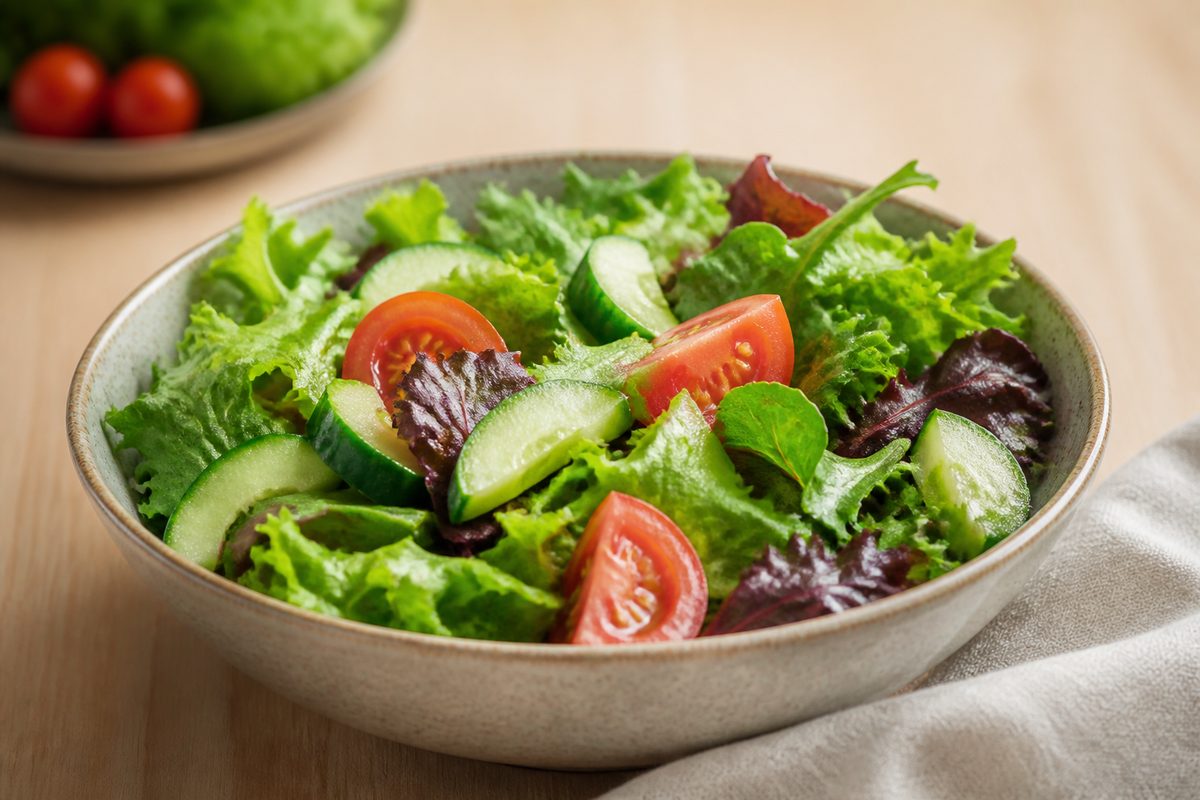
Yes — salad can sit with less anxiety for some people. Among foods linked to anxiety in Eat Smart Kiwi community data, salad ranks #3 — and the direction is that salad helps.
That is a strong community rank from about 500 diaries, not a bowl that treats an anxiety disorder. Water and decaf coffee both rank higher for this symptom. A mixed salad is not one ingredient, and it is not a replacement for a GP, therapy, or prescribed medicine.
Why salad might help
Eat Smart Kiwi users who log salad often report calmer anxiety scores in the following eight hours. That is a lunch-to-afternoon window, not a months-long diet pattern.
The closest large study did not test a bowl of leaves. In more than 9,000 pregnant women in the Avon Longitudinal Study of Parents and Children, a “health-conscious” eating pattern — salad plus fruit, pulses, fish, cheese, oats, and other whole foods — sat with lower odds of high anxiety at 32 weeks of pregnancy. A “traditional” pattern (vegetables, meat, poultry) showed a similar, smaller link. Women with little or no seafood omega-3 had higher odds of high anxiety. A vegetarian pattern went the other way. That is a food-frequency snapshot in pregnancy, adjusted for lifestyle, not proof that salad lowers anxiety eight hours later in everyone.[1]
So the honest picture is: diaries often sit quieter after salad, and the research we have is about overall eating patterns in pregnancy, with salad as one item among many. Possible everyday reasons the pair shows up include swapping a heavy processed lunch for something lighter, eating salad on days you already feel more in control, watery vegetables next to a drink of water, or a real individual response that trials have not isolated.
Do not treat lettuce-seed oil capsules as this pair. A small, company-linked sleep study used 1,000 mg of seed oil for a week in people with insomnia — not garden lettuce in a bowl, and not an eight-hour diary. Folk “sedative lettuce” is not a mixed-salad trial.
Salad in this app is whatever you logged as salad. Onion, beans, cheese, croutons, and a creamy dressing change the plate. The same food worsens gas for many users — see does salad cause gas?. A calmer afternoon is not the same as a quieter gut.
Eating salad because you feel you “should” is a different experiment from eating it because you want it. Restriction and self-care can both hide under the same log.
Who is most likely to notice a benefit
- People already eating salad as a usual meal — that is what the diaries measure, not a pregnancy food-frequency score.[1]
- Anyone swapping a heavy, ultra-processed lunch — the contrast may be the meal you did not eat.
- People who also drink water with the bowl — water ranks #1 for anxiety in this community; log both if you can.
- Anyone hoping a bowl treats panic or generalised anxiety — Vaz measured pregnancy questionnaire scores, not a crisis.[1]
Salad will not replace mental-health care.
What you can try
- Keep the bowl simple while you test — leaves and a few vegetables, not a loaded plate you cannot unpack later.
- Log the extras — cheese, croutons, nuts, and dressing are part of the meal.
- Do not credit the salad if you also skipped coffee or drank more water — those have their own anxiety pairs.
- Compare like for like — salad days versus sandwich or takeaway days, same time of day.
- Compare in your tracker — which ingredients, how large a serve, and how you already felt that morning, shows whether your pattern matches the community trend.
Eat Smart Kiwi community data
Among foods linked to anxiety in Eat Smart Kiwi community data, salad ranks #3 — and the direction is that salad helps. Salad and anxiety also ranks #94 among all food–symptom pairs tracked in the app — a lower mid-table overall rank, not a top pair across the whole food–symptom list.
The pattern is most often seen within about 8 hours of eating salad, based on aggregated diary data from about 500 users. These are real-world logging patterns among people tracking food and how they feel; they are not a clinical trial and do not prove salad reduced anxiety in every case — but they are the strongest evidence we have for this specific pair, and they sit in a much shorter window than pregnancy diet scores.
Why tracking helps you
A side of leaves, a loaded café salad, and a pregnancy-style “health-conscious” week are different experiments. Logging what was in the bowl next to anxiety scores shows whether your pattern matches the community trend — or whether water, caffeine, sleep, or treatment are doing more of the work.
If you want to see whether salad or the rest of the day is easing your anxiety, try logging in the Eat Smart Kiwi food and symptom tracker.
Summary
Salad often sits with less anxiety in Eat Smart Kiwi tracking, and it ranks #3 among foods for that symptom. A large pregnancy study linked a salad-containing whole-food pattern — and seafood omega-3 — with lower high-anxiety scores; that is not an eight-hour bowl trial. A simple plate, your own diary, and usual mental-health care are practical next steps.
This article is for general information only and is not medical advice. If anxiety is severe, persistent, or includes panic, see a doctor.